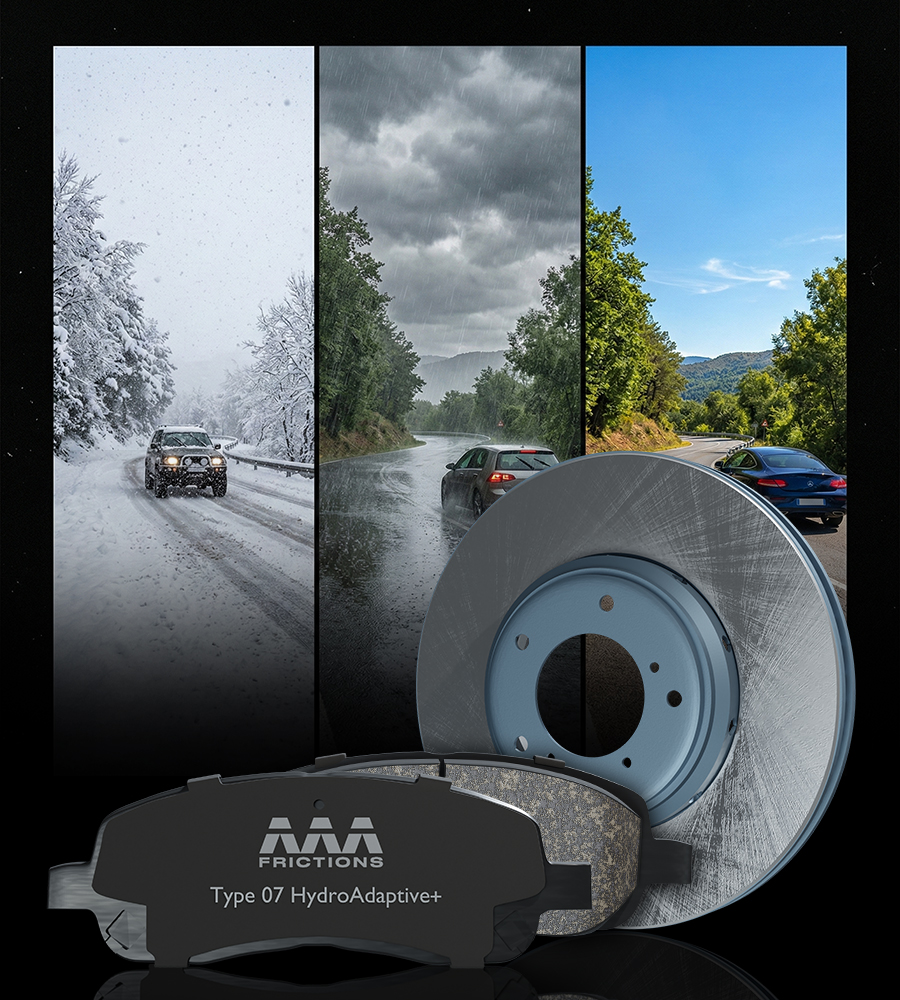
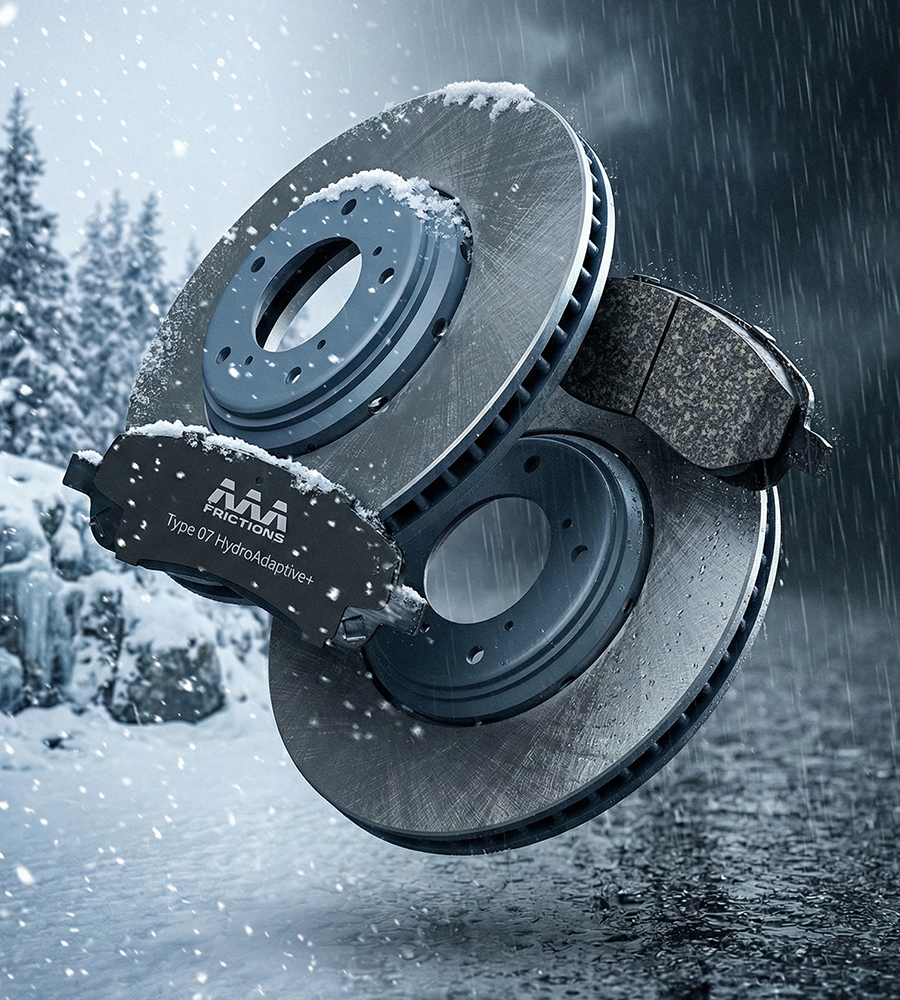
Wet roads reduce friction.
Cold temperatures reduce it even further.
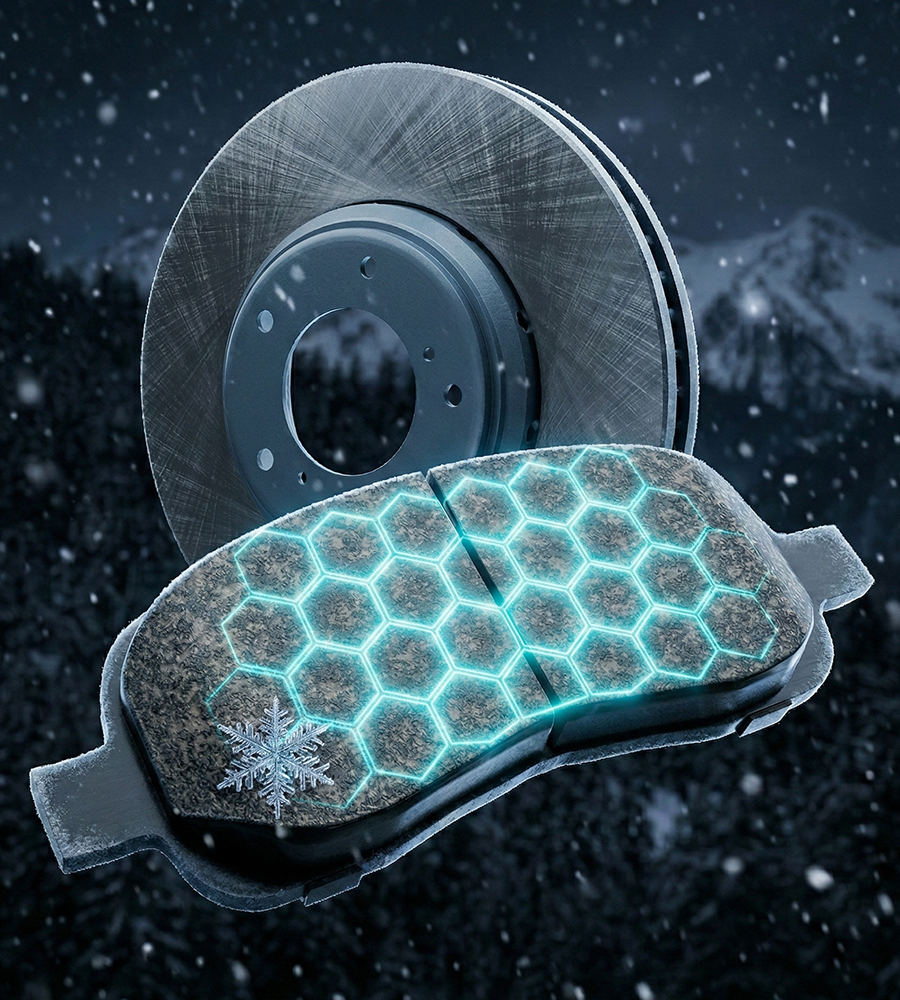
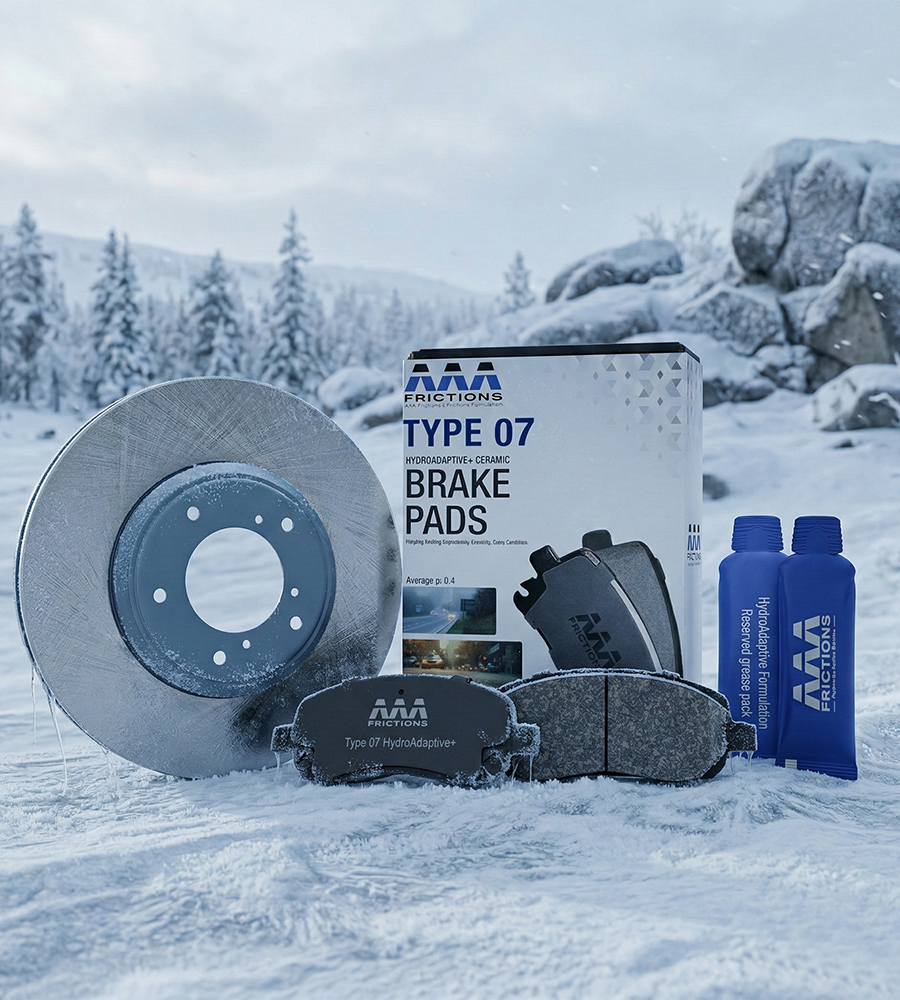
In freezing conditions, conventional ceramic pads stiffen. Friction output drops until heat builds. The first stop of the morning often feels weaker than expected.
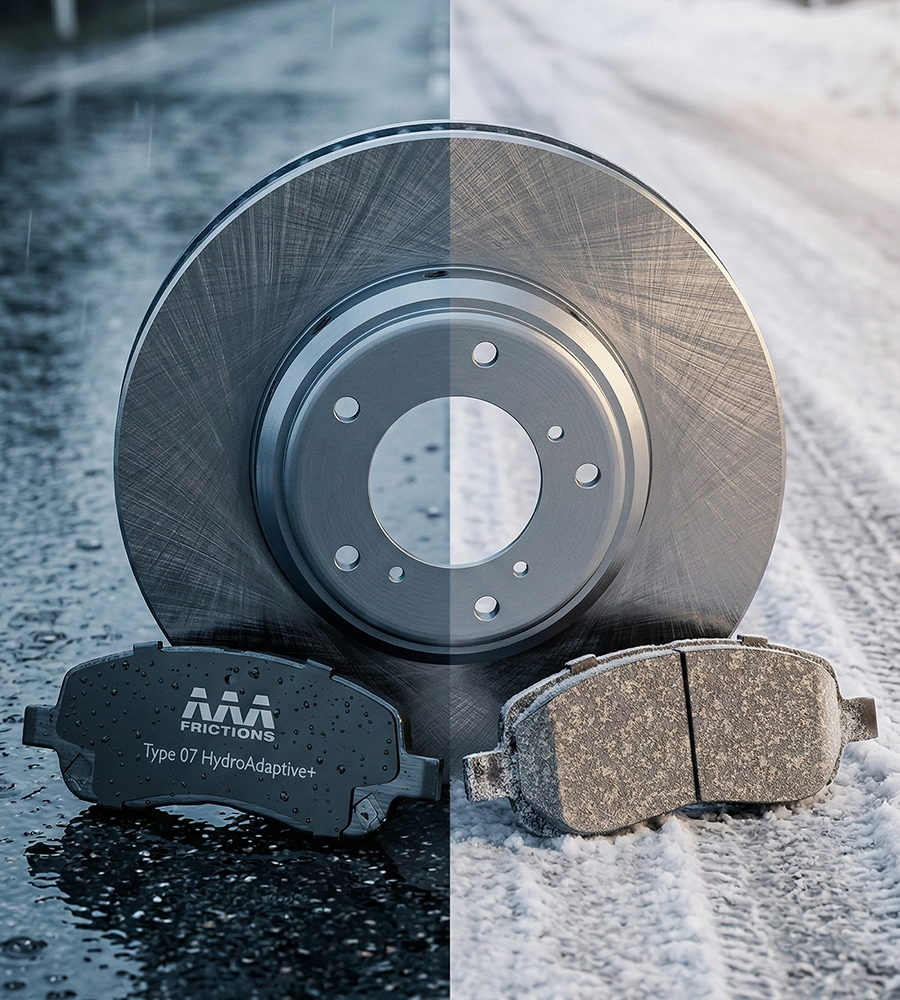
Add snow, slush, or micro moisture between pad and rotor, and braking consistency becomes even more unstable.
Drivers experience:
- Reduced initial bite in cold temperatures
- Delayed response on freezing mornings
- Variable torque when transitioning between dry pavement and snow
- Inconsistent pedal feel across seasonal changes
Traditional pads were never engineered to remain responsive in low temperature environments