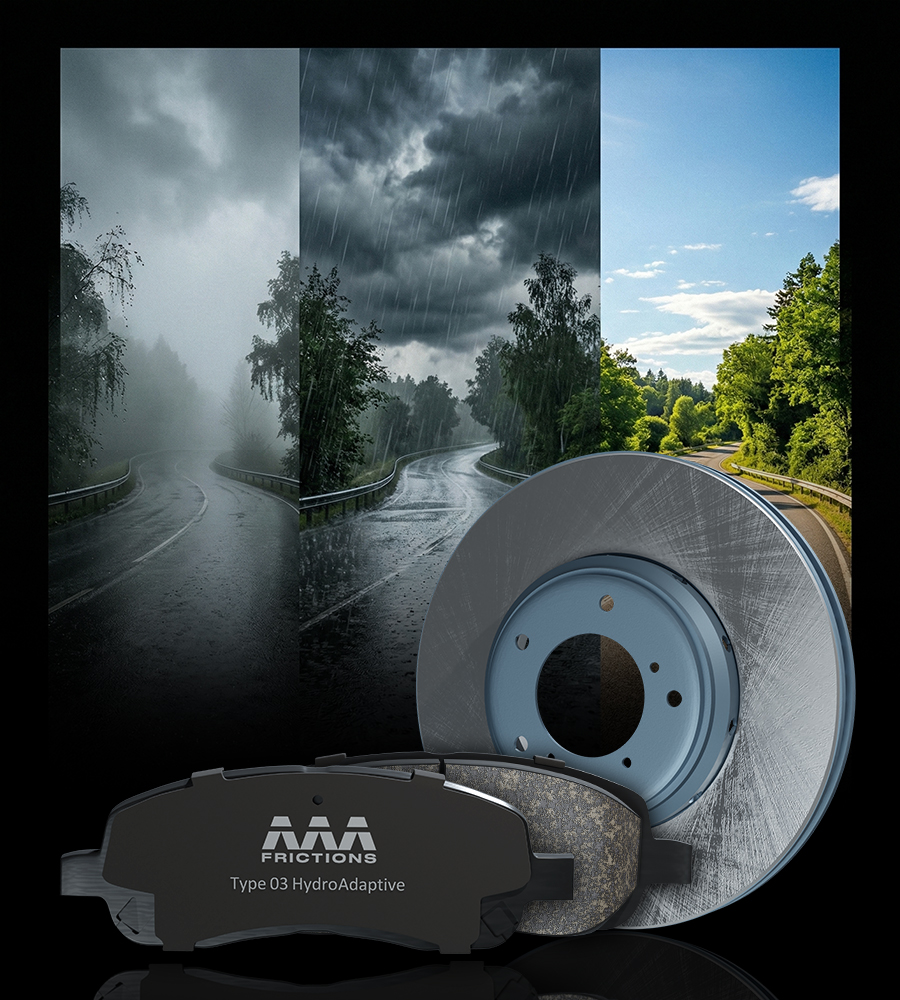
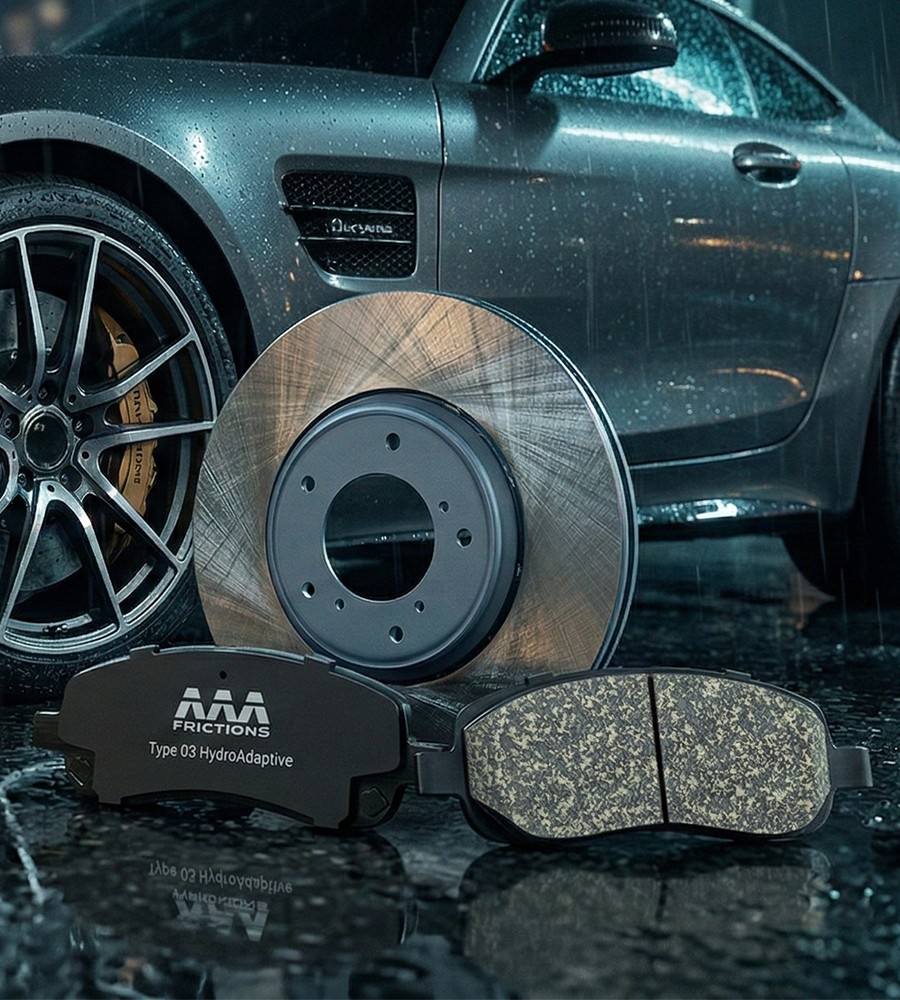
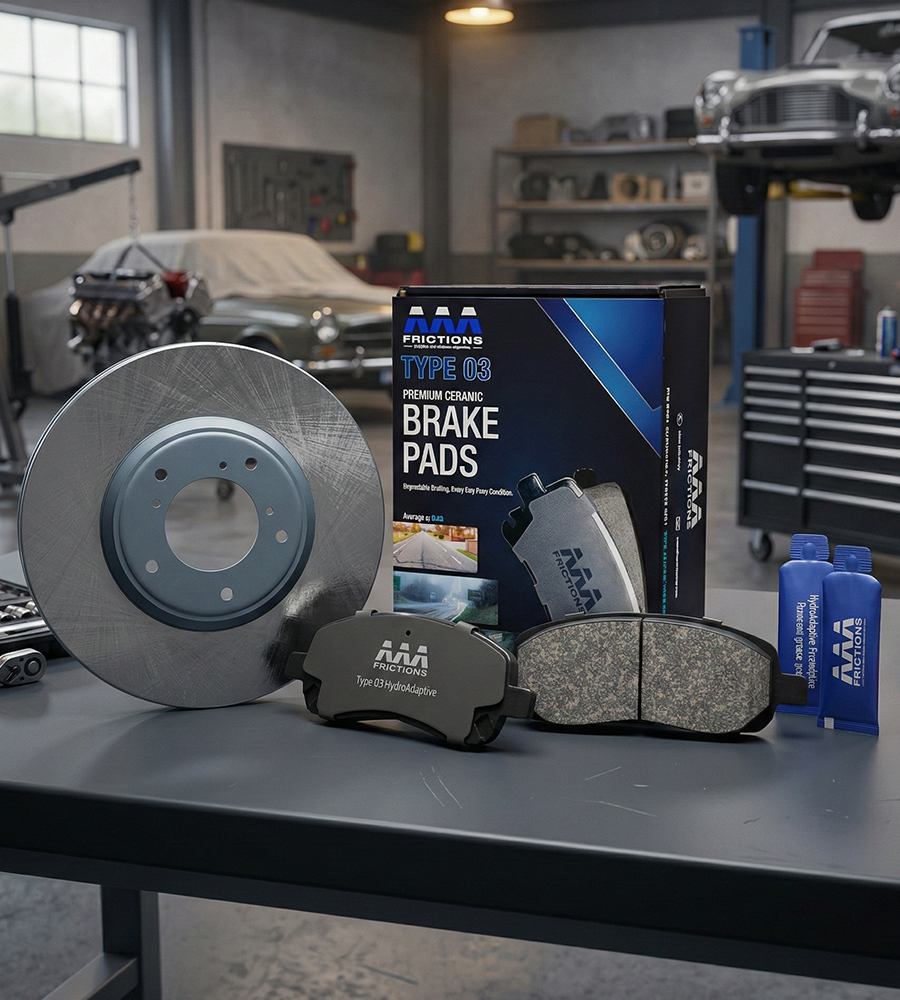
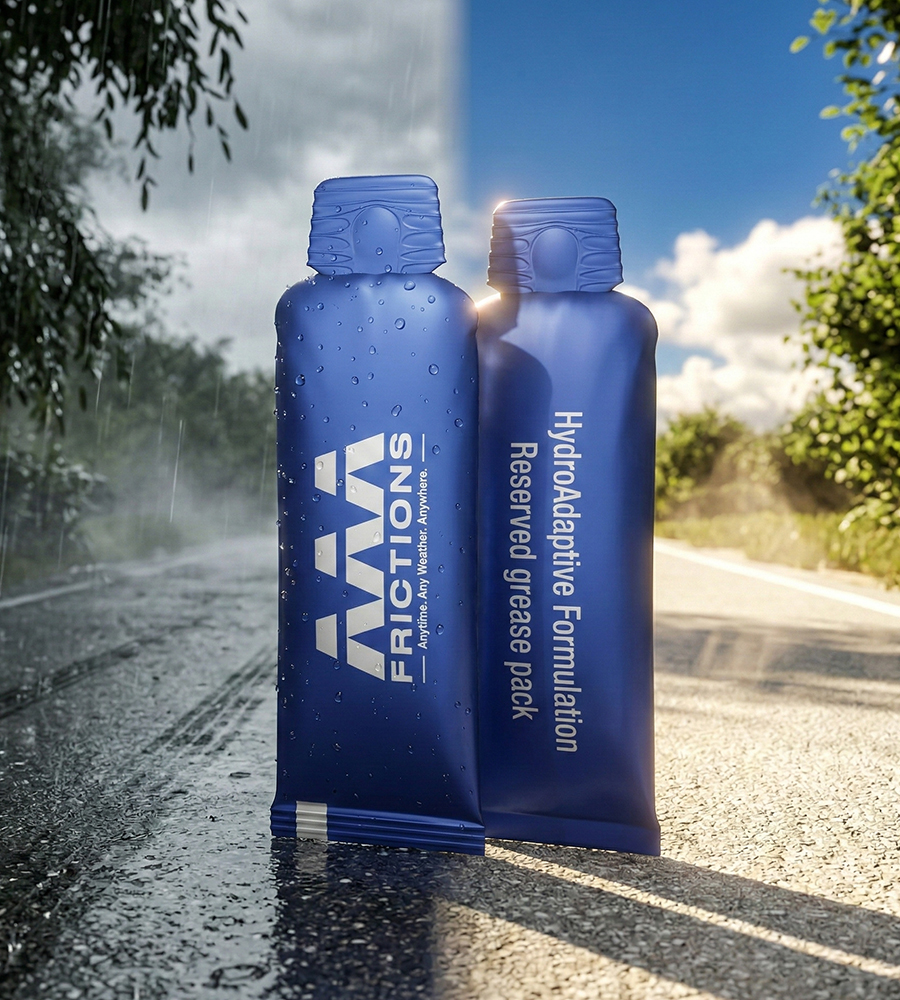
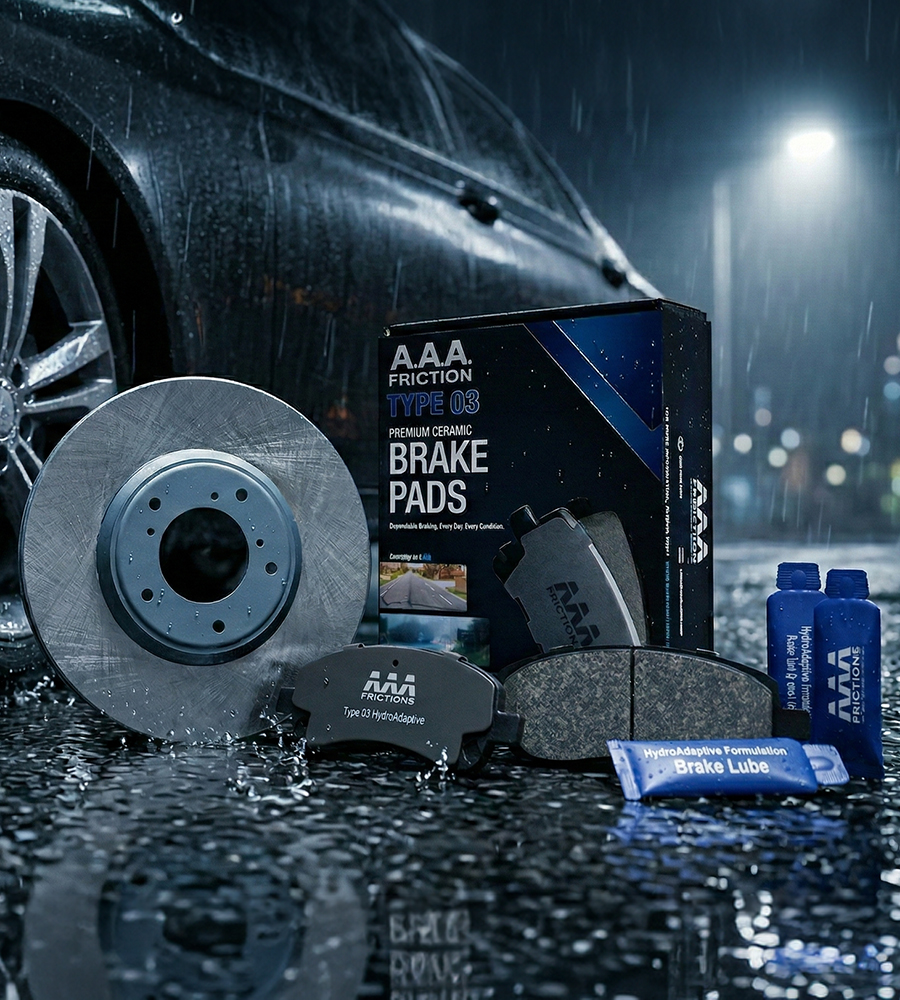
Most aftermarket brake systems are engineered around dry, controlled test conditions. Real roads are different.
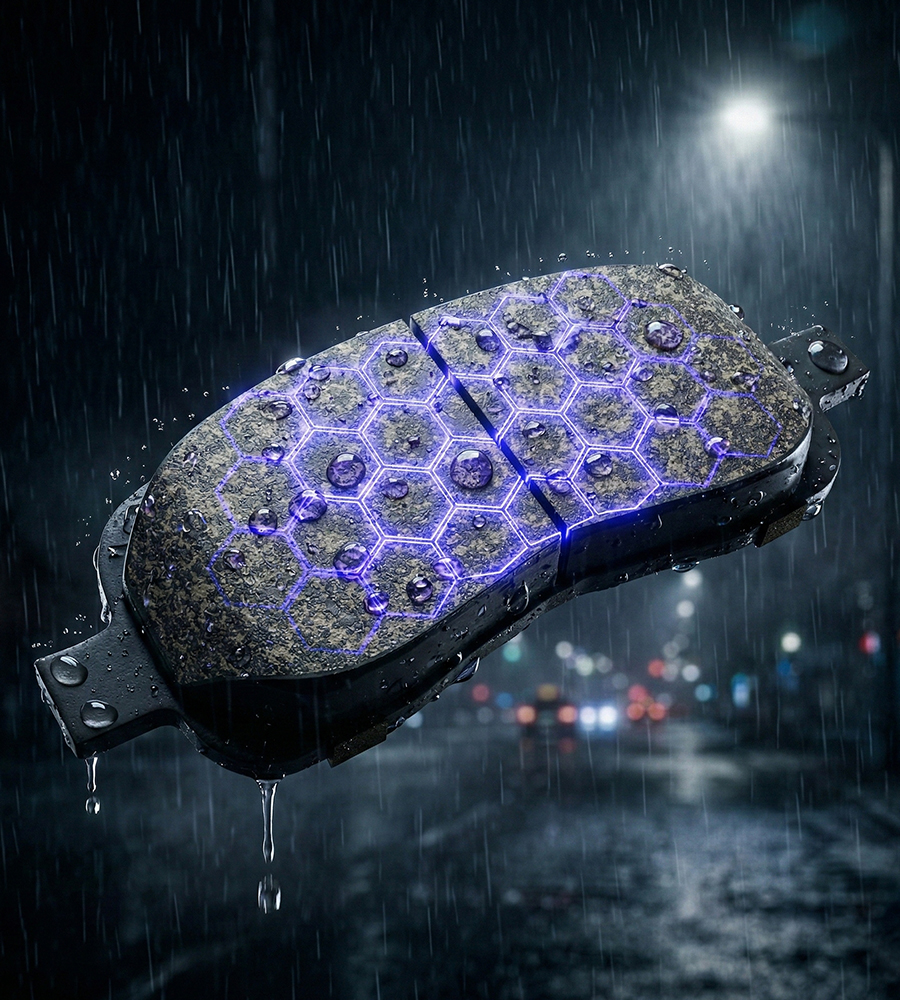
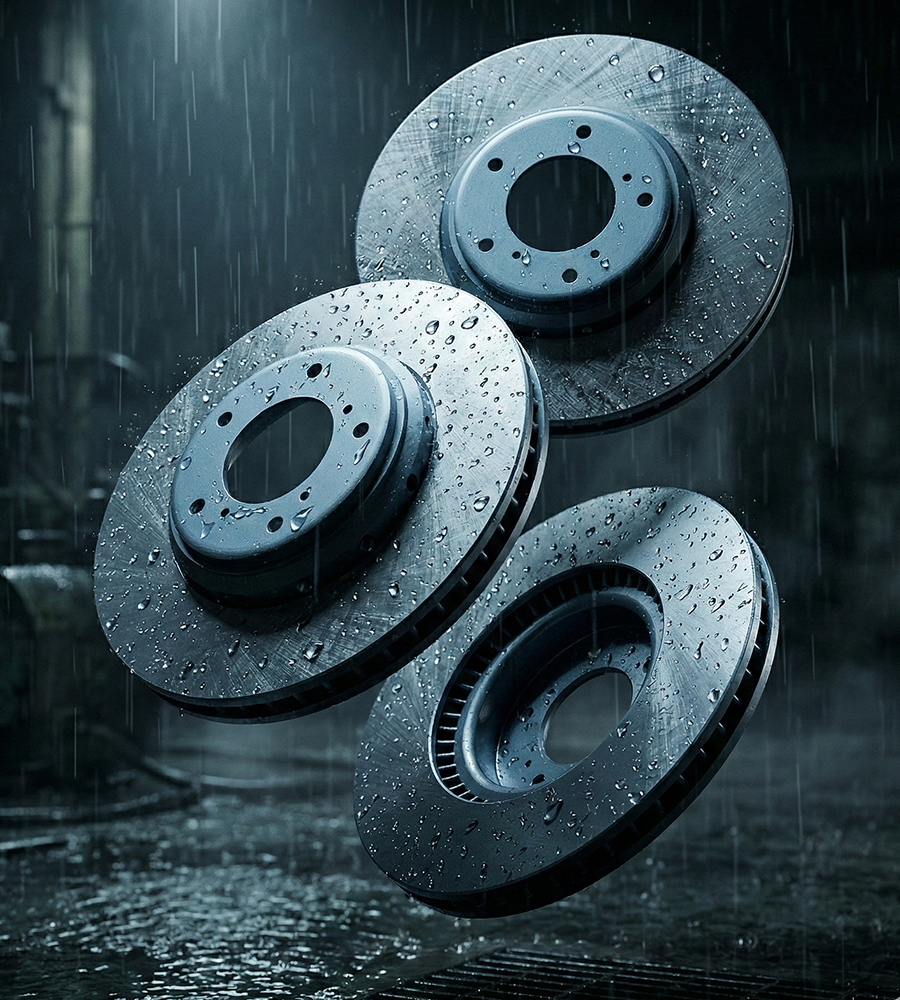
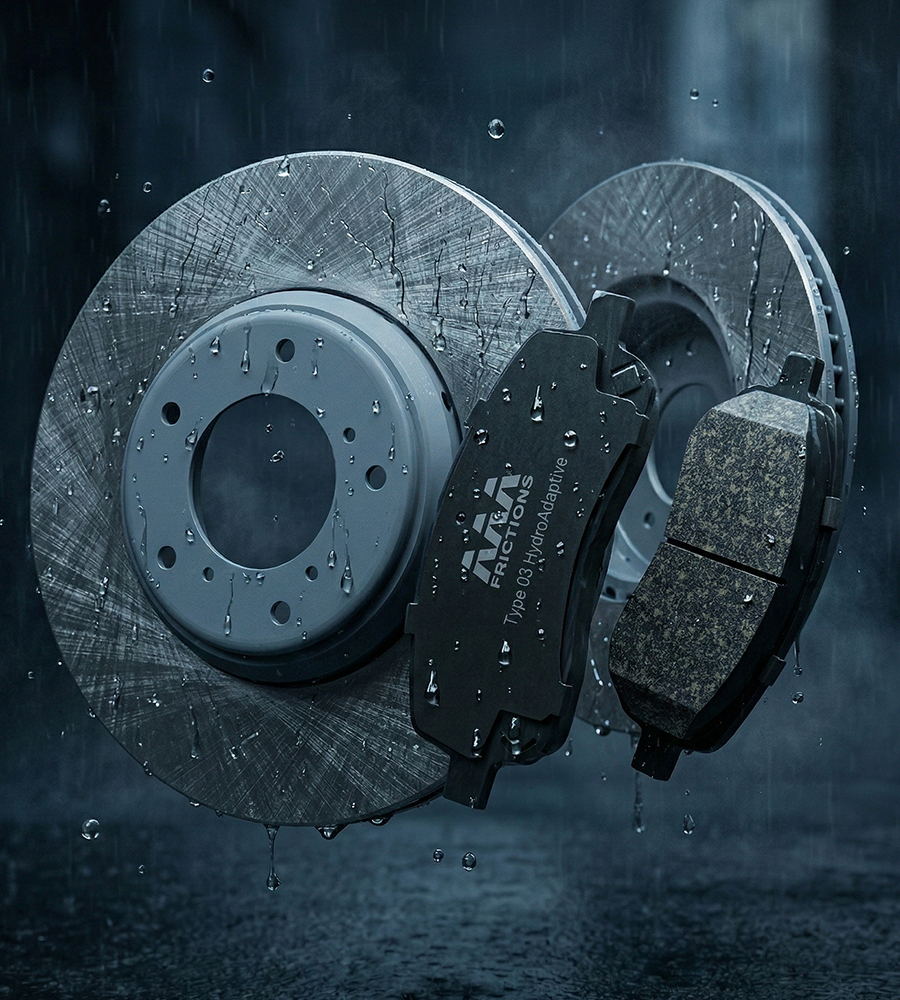
When rain falls or humidity rises, moisture forms a thin film between the brake pad and rotor surface. Conventional ceramic pads allow water to linger at the friction interface. This reduces surface contact, lowers friction output, and delays bite response.
- Drivers experience this as:
- A softer initial pedal feel
- Slight delay before braking “grabs”
- Inconsistent stopping performance during heavy rain
- Variable pedal response as humidity shifts
Traditional pads were built to handle heat. They were never engineered to manage moisture.
AAA Frictions was built to solve this overlooked problem