

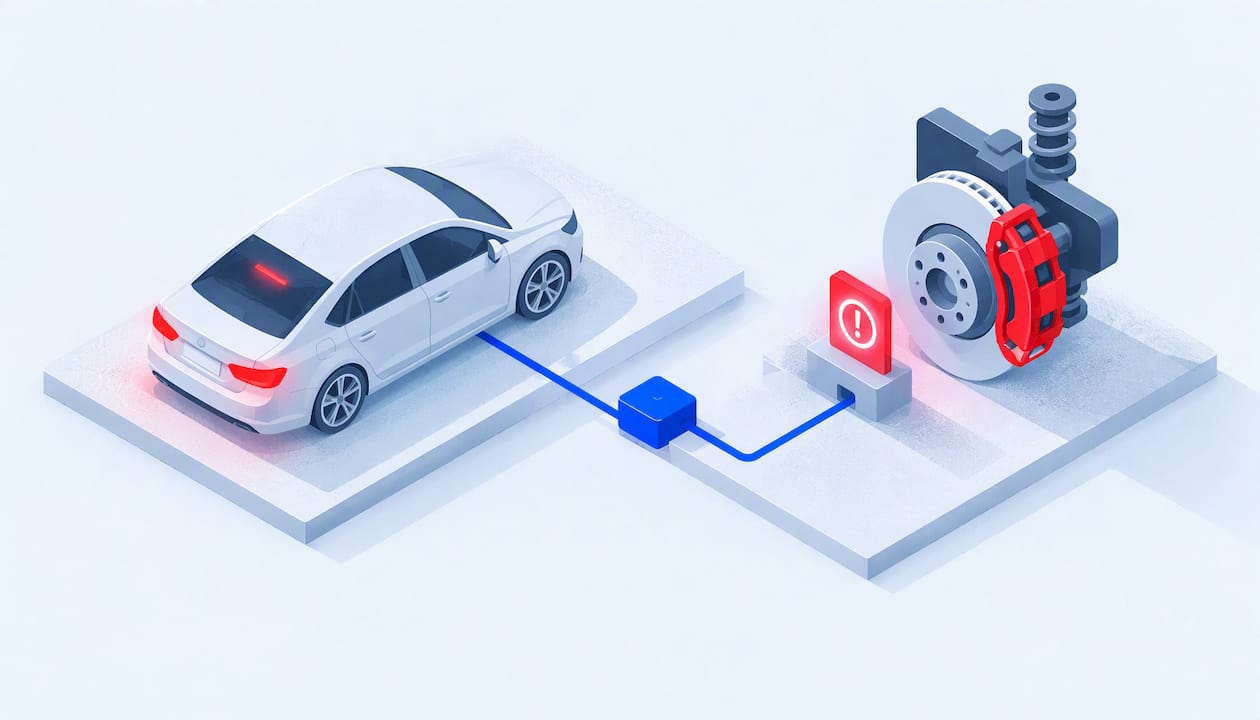
The brake light on your dashboard usually comes on for one of four reasons: the parking brake is still applied, the brake fluid is low, the brake pads are worn or a sensor has failed, or something in the brake system has a fault. The first is a five-second fix. The others need attention soon. If the light stays on after you release the parking brake, treat it as a real warning and don’t keep driving as if nothing happened.
This guide walks you through what to check first, how to tell the different brake-related lights apart, when to stop, and what usually fixes each cause.
TL;DR
- Check the parking brake first. A handle, pedal or switch that isn’t fully released is the most common cause of a brake light.
- If the light stays on after you release it, or comes on while you drive, low brake fluid, worn pads or a faulty sensor are the likely causes.
- Automakers say not to drive with the brake system warning on. Park somewhere safe and get the car checked.
- A separate ABS light, or a brake-lamp warning about your exterior lights, points to a different problem.
- Worn pads and rotors are a common, fixable cause. Matched replacement parts restore the braking feel the light was warning you about.
Table of Contents
- What the brake light is actually telling you
- Step one: check the parking brake
- Low brake fluid
- Worn pads and rotors
- A faulty sensor or wiring
- Brake light, ABS light or a brake-lamp warning: which one is it?
- Should you keep driving?
- Our perspective: what the warning light says about the whole system
- If worn parts are the cause
- How to avoid the light coming back
- FAQ
- Sources
What the brake light is actually telling you
Cars have more than one brake-related lamp, and the wording differs by brand. You might see the word BRAKE, an exclamation mark inside a circle, a letter P in a circle, or the letters ABS. Each one is tied to a different part of the system.
Ford’s support page says the brake warning may mean the parking brake is applied, or that the vehicle has a brake fault or low brake fluid. It adds that driving with the lamp on is dangerous, because braking performance may drop and stopping may take longer.
Color matters too. Ford says orange or red warning lights mean the vehicle has a problem and should be promptly taken to a dealer, while a yellow light may mean service is required. Red is the one to take most seriously.
Step one: check the parking brake
This is the cheapest check, so do it first. If the brake system lamp comes on while you’re moving, Ford’s guidance is to make sure the parking brake is off.
A few things to try:
- Push the handle down or the pedal fully, then release it again. A lever that sits one click short of the bottom keeps the switch closed.
- With an electronic parking brake, press and hold the switch to release it, and watch the display for a confirmation message.
- Look for a message in the instrument cluster. Many cars say “Release parking brake” in plain words.
- If the light goes out, you’re done. If it comes back, the switch may be sticking or misaligned. That’s a cheap repair, but have it checked so the light can still warn you about real problems.
If the parking brake is fully off and the light stays on, move to the next step.
Low brake fluid
Brake fluid carries the force from your foot to the wheels. If the level drops, the warning lamp can come on. A UK consumer group notes that if the light stays on after you release the handbrake, or comes on after you start driving, brake fluid might be low. Other possible causes it lists are worn brake pads or a faulty sensor.
Two things can lower the fluid level:
- Pad wear. As pads thin out, the caliper pistons extend farther and more fluid sits in the calipers instead of the reservoir. The level falls slowly over thousands of miles.
- A leak. A leak in a line, hose, caliper or master cylinder drops the level much faster. This is a safety problem, not a maintenance item.
How to check the level safely
Park on level ground with the engine off. Open the hood and find the brake fluid reservoir, a small container near the driver’s side of the firewall on many cars. If you’re unsure where it is, check the owner’s manual. The same UK guide says the markers on the reservoir show whether the car needs a top-up.
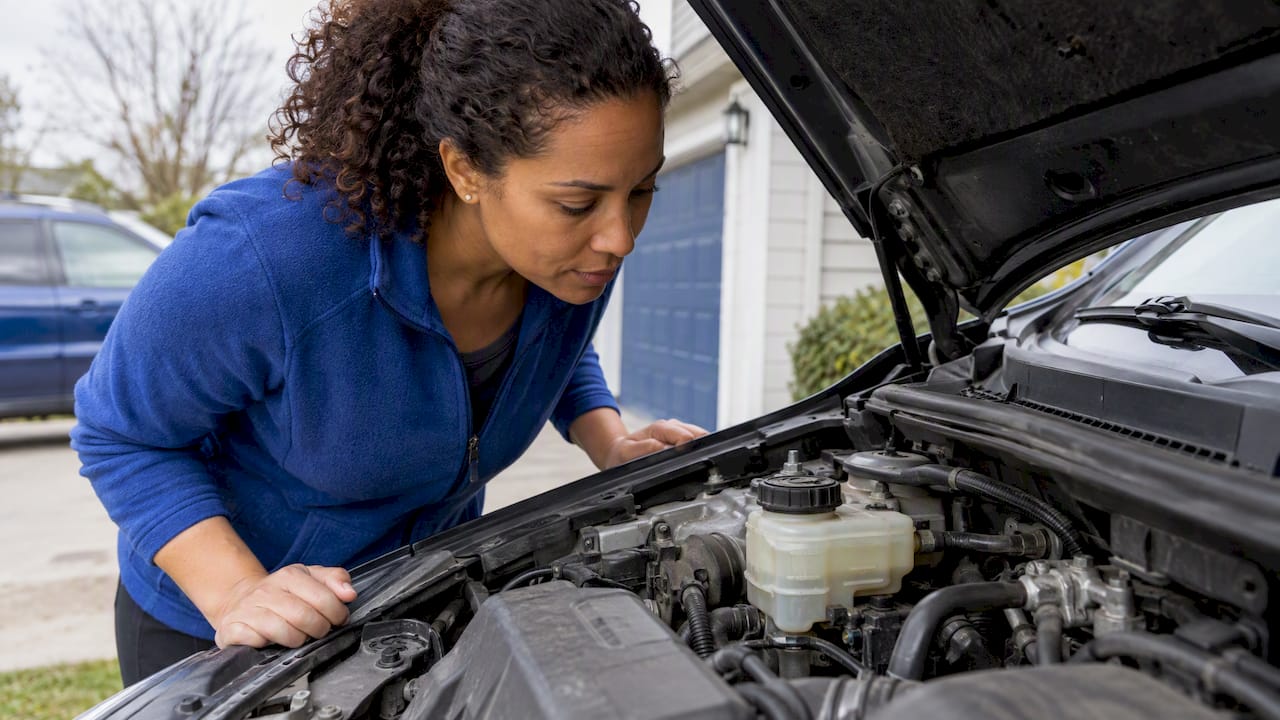
Most reservoirs are translucent, so you can read the level through the side without opening anything. That matters: the UK government’s MOT inspection manual describes checking the level through a transparent reservoir or an indicator and not by removing the reservoir cap. Brake fluid absorbs moisture from the air once the system is open, and a cap off for no reason lets dirt and humidity in.
What the reading means:
- Between MIN and MAX: the fluid isn’t the cause. Look at the other possibilities below.
- At or below MIN: don’t just top it up and drive off. The level fell for a reason, either worn pads or a leak. Have the system inspected, and use the fluid type printed on the cap or in the manual.
- Empty, or the pedal feels soft: don’t drive. Call for a tow.
Worn pads and rotors
Some cars have wear sensors that turn on a dashboard lamp when pad material runs low. On others, the first clue is sound and feel. Chevrolet’s vehicle support page says there is no universal mileage interval for brake service, since wear depends on driving habits and conditions. It recommends checking the brakes at every multipoint inspection.
The same page lists signs that your brakes need inspection:
- Squealing, chirping or whistling from the wear indicators
- Grinding
- Longer stopping distances
- A spongy or unusually deep pedal
- Vibration through the pedal or steering wheel
- Pulling to the left or right when you brake
If the light and one of these symptoms show up together, worn pads are your prime suspect. Not every pad has an audible wear indicator, so a quiet brake isn’t proof of a healthy one. A visual check of pad thickness and rotor surface is the reliable way to know. We cover the noise side in more detail in our piece on whether squeaking comes from pads or rotors.
Worn pads that are left too long wear into the rotors, which turns a pad job into a pad-and-rotor job. If you have already got scoring, rust ridges or a lip on the rotor edge, replace the two together.
A faulty sensor or wiring
Sometimes the brakes are fine and the light is not. The brake fluid level sensor sits in the reservoir cap or body and can fail or get dirty. The parking brake switch can corrode. Wiring near the wheels takes a beating from water and road salt. The symptom is a light that stays on or flickers while the pedal feels normal, the fluid is fine and the pads are thick.
If that sounds like your car, don’t assume it’s the sensor. A technician should confirm the cause with a scan tool and an inspection, because a sensor failure and a real fluid problem look identical from the driver’s seat.
Brake light, ABS light or a brake-lamp warning: which one is it?
These get confused constantly, and they’re different problems.
| What you see | What it usually means | What to do |
|---|---|---|
| Red BRAKE or (!) lamp | Parking brake applied, low fluid, or a brake system fault | Release parking brake; if it stays on, stop and get it inspected |
| Amber ABS lamp | The anti-lock system has a fault or has been disabled; normal brakes may still work | Get it diagnosed soon; allow extra stopping distance |
| Brake lamp or bulb warning | An exterior brake light is not working | Have a helper check the lights while you press the pedal |
| Red P or (P) lamp | Electronic parking brake status or fault | Check the switch, then see the manual |
Honda’s owner’s manual says its brake lamp indicator comes on if a brake light does not work when you press the pedal with the ignition on. That’s an exterior bulb or switch issue, not the hydraulic system.
There’s also a harmless case. The same Honda manual notes that after a jump-start, the ABS light may come on because of low battery voltage. After the battery is recharged and the engine is turned off and restarted, the light should come on for a few seconds to show the system is okay. If the light you see isn’t listed in this guide, Ford points drivers to the Warning Lamps and Indicators section of the owner’s manual.
Another normal behavior: some vehicles with full power hydraulic braking systems turn on the low-pressure warning light when the ignition is switched on. According to the UK MOT manual, that’s not a defect unless it stays on after the engine has started. Every bulb lights briefly at startup as a self-check, so a lamp that goes out within a few seconds is fine.
Where is the brake light switch?
The brake light switch is a small plunger or contact switch mounted at the top of the brake pedal arm, under the dashboard or on the firewall. When you press the pedal, it sends power to the rear lights so drivers behind you know you’re slowing.
It isn’t the same part as the dashboard brake warning sensor. The pedal switch controls your rear brake lights. The dashboard warning comes from the parking brake switch, the fluid level sensor or the brake control module. A failed pedal switch usually means the exterior lights stay dark or stay on, and on some cars it can also trigger a brake-lamp message or affect cruise control.
Should you keep driving?
The manufacturers are blunt about this. Mazda’s owner’s manual says not to drive with the brake system warning light illuminated: park in a safe place immediately and contact an authorized dealer.
Here’s a practical way to decide:
- Light on, parking brake released, pedal feels normal, fluid in range: drive carefully, directly to a shop. Don’t postpone it.
- Light on and the pedal is soft, sinks, or needs more travel: stop. Don’t continue. Arrange a tow.
- Light on with grinding, pulling or much longer stopping distance: stop and have it towed or inspected where you park.
- Light flickers only over bumps or turns: a loose connector or low fluid sloshing against the sensor is possible. Have it looked at soon.
One more tip from the AAA car maintenance guide: plan in advance what you’d do if a warning light comes on while driving, and don’t dig for the manual mid-drive. Know where the manual’s warning-light section is, and have a roadside assistance number saved in your phone. When you do pull over, turn on your hazard lights, shift to park and check the parking brake before anything else.
Our perspective: what the warning light says about the whole system
We build brake parts, so we spend our time on the failure that most often sits behind a brake light: components that wear and degrade faster than the driver expects. Our view is simple. A warning lamp is the last signal in a long chain. Before it comes on, there are usually weeks of subtle changes: a longer stop in the rain, a bit of vibration, a pedal that’s a little deeper than it was.
Weather accelerates that chain. Moisture on pads can change the friction in the first few stops. Road salt attacks uncoated rotors and caliper hardware. Cold can stiffen sliding parts so a caliper doesn’t release cleanly. That’s why we engineer pads, rotors and calipers around those conditions: HydroAdaptive ceramic pads for moisture management and stable friction, GEOMET-coated rotors for corrosion protection against moisture and road salt, and ClimateFlex calipers for smooth operation in winter cold and summer heat.
We also develop rotors and pads as a matched system, and we sell rotors only as part of brake kits so the compatibility is engineered rather than guessed. If your light traces back to worn pads and rotors, replacing the full set together is the cleaner fix than a pad-only patch that leaves a worn rotor in place.
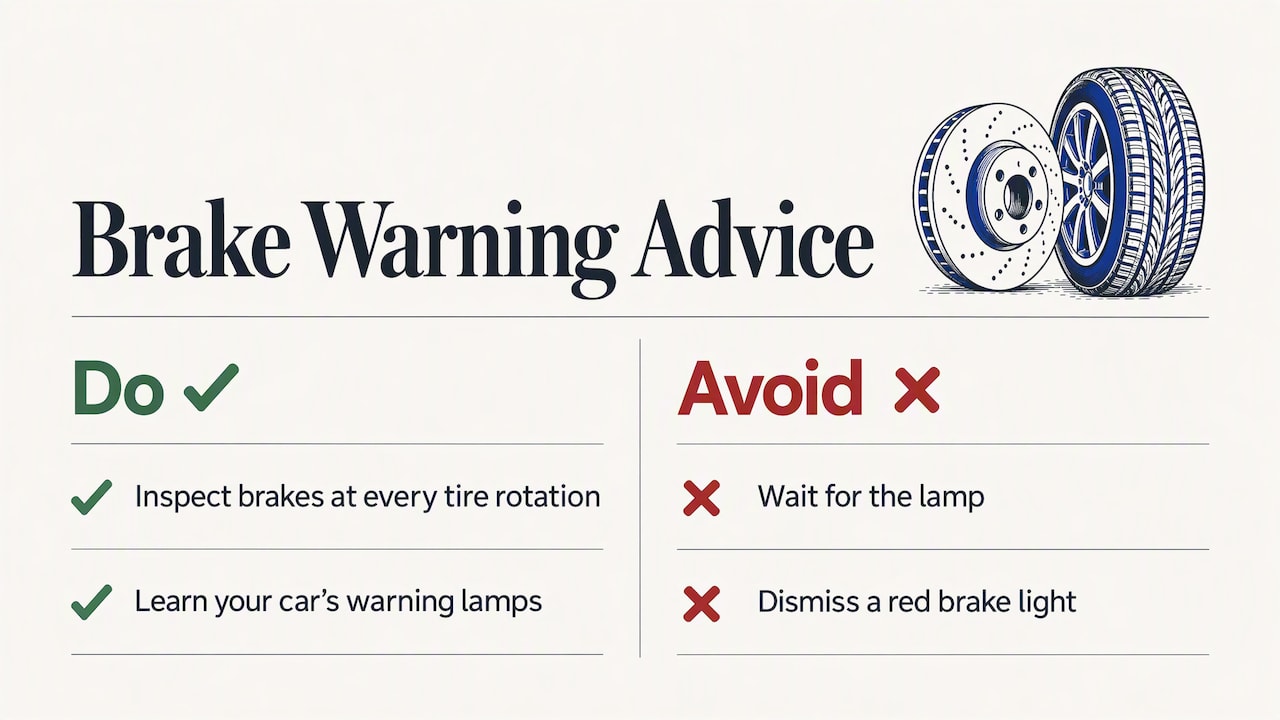
What we’d tell a friend: don’t wait for the lamp. Inspect the brakes at every tire rotation, learn what your car’s lamps look like, and never treat a red brake light as an annoyance.
— AAA
If worn parts are the cause
Once a technician or your own inspection confirms worn pads, you have two choices: pads only, or a kit. If the rotors are scored, rusted or thin, a kit is the right call. Our brake kits are matched by vehicle, so you pick your make, model and year and get parts engineered to fit together.
A few places to start:
- Type 07 brake pads with GC rotors kit pairs our HydroAdaptive+ ceramic pads with GEOMET-coated rotors.
- Type 03 brake pads with SC rotors kit is another matched option.
- If your calipers are sticking or seized, see the ClimateFlex brake calipers.
Not sure which pad material suits your driving? Our guide to ceramic versus semi-metallic pads explains the tradeoffs. Prices are on each product page, and you can browse everything from the AAA Frictions home page.
Brake fluid leaks, a soft pedal and a failed master cylinder are not parts-swap jobs for a driveway. Have a qualified technician handle those.
How to avoid the light coming back
- Inspect on a schedule. Chevrolet recommends a brake check at each multipoint inspection. If you drive a lot, as rideshare and delivery drivers do, or you tow, shorten that gap.
- Check fluid every few months. A glance at the reservoir takes ten seconds, and a falling level tells you pads are thinning.
- Replace fluid per your manual. Old fluid holds moisture. Follow the interval in your owner’s manual.
- Wash the underbody after salty roads. Salt eats rotors, hardware and wiring connectors.
- Listen and feel. Treat a new noise, vibration or pull as an early warning, well before any lamp.
FAQ
Why is my brake light on but my brakes work fine?
A working pedal doesn’t mean the system is healthy. The light may be caused by a parking brake that isn’t fully released, a fluid level that’s low but not yet critical, or a failing sensor. Check the parking brake and the fluid, then have a shop confirm the cause rather than assuming it’s a false alarm.
Can I drive with the brake light on?
Automakers advise against it. Mazda says to park in a safe place immediately and contact a dealer. If you have confirmed the parking brake is fully released and the pedal feels normal, the only reasonable drive is a careful one straight to a shop. If the pedal is soft or the car pulls, stop and arrange a tow.
Why is my brake light on after I changed my pads?
Check the fluid level first, as pushing the pistons back during a pad swap can raise the level in the reservoir, and overfilling can cause problems. Also check that the parking brake is released and that the wear sensor connector, if your car has one, is plugged in. If the light stays on, return to the shop that did the work.
How do I know if it’s the brake light or the ABS light?
Read the symbol or the word. BRAKE or an exclamation mark in a circle relates to the base brake system and parking brake. ABS relates to the anti-lock system. A separate brake-lamp message, as on some Honda models, means an exterior brake light isn’t working when you press the pedal. Your owner’s manual lists every lamp for your car.
Sources
- What do the warning and indicator lights in my Ford mean?
- 7 car dashboard warning icons you need to know about
- MOT inspection manual: cars and passenger vehicles, brakes
- The Brake System, Chevrolet vehicle support
- Honda owner’s manual, indicators
- Warning/Indicator Light Turns On, Mazda owner’s manual
- AAA Car Maintenance Guide: warning lights
- What Is a Brake Light Switch and When Should You Replace It?