

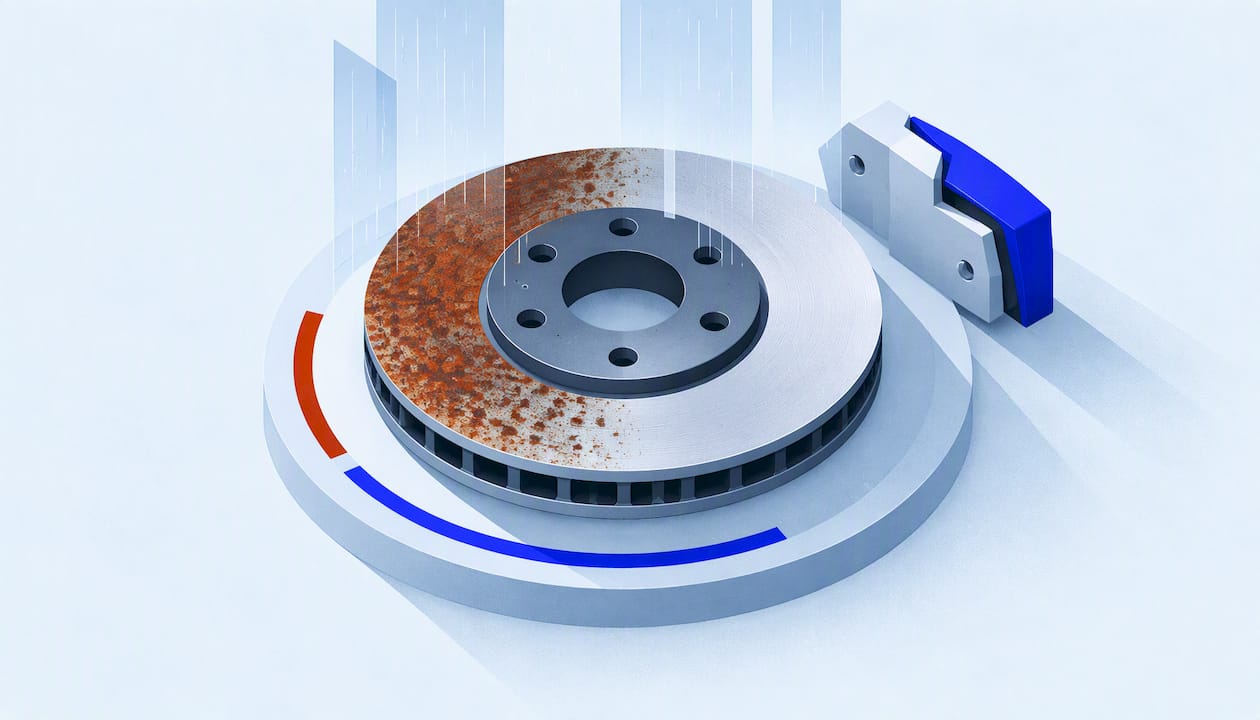
Brake rotors rust after rain because they are bare gray cast iron, and bare iron reacts with water and oxygen within hours. A thin orange-brown film on the rotor face after a wet night is normal. In most cases normal driving wipes it away. Rust that stays on, comes with a pulsing pedal or noise, or leaves pits and flaking on the rotor is a different story, and this guide shows you how to tell the two apart.
TL;DR
- Surface rust on rotors after rain, dew or humidity is normal. Cast iron corrodes quickly, and corrosion rates depend on temperature, humidity and salt.
- Braking systems are largely self-cleaning in regular use, so light rust usually disappears after you drive and brake a few times.
- Rust that does not come off, plus pitting, swelling, flaking, pulsation or reduced braking, calls for a professional inspection.
- Long parking in damp conditions, heavy road salt and low brake use (common on electric vehicles) make rotor rust worse.
- Washing off salt, driving regularly and choosing coated rotors reduce how much rust builds up.
Table of Contents
- Why rotors rust so fast
- Why it is usually normal, and why it clears
- Why some cars rust faster than others
- When rust is a real problem
- What to do about rusty rotors, step by step
- How to reduce rotor rust
- Our perspective: weather is a braking problem, not just a driving problem
- Brake kits built for wet and salty roads
- Frequently asked questions
- Sources
Why rotors rust so fast
A brake rotor has one job: provide a clean, hard surface for the pads to grip. Most rotors are made of gray cast iron because it handles heat and wear well. The trade-off is that iron has no natural protection against moisture. Unlike the painted body of your car, the friction face of a rotor cannot be coated, because the pads need to touch bare metal every time you brake.
Research on gray cast-iron discs confirms that ambient temperature, humidity and salinity strongly affect how fast they corrode. That explains the pattern most drivers notice:
- Rain and puddles: water sits directly on the exposed face and the rotor hat, and you can see a haze within hours.
- Humid air and dew: no rain needed. A cool night after a warm day is enough to leave the discs damp.
- Road salt: in snowy states, salty slush speeds up corrosion far beyond what plain water does.
- Warm metal meets water: rotors are hot after a drive, then cool quickly when you park, which pulls in moisture.
The reason it looks so dramatic is that the rotor is a large, flat, uncoated surface. A few thousandths of an inch of oxide looks like a lot of color on a disc that is otherwise shiny. It is a bit like a cast-iron skillet left wet on the counter: the change is fast, but it is shallow.
Why it is usually normal, and why it clears
The rust you see after a rainy night is surface oxidation. The pads sweep it off the moment they press against the rotor. A federal safety agency service document notes that vehicle braking systems tend to be self-cleaning while the vehicle is in use, which prevents corrosion from building up on the rotor surfaces.
You can see this on your own car. After a wet night you will typically find:
- An even orange or brown tint across the whole rotor face.
- A shiny, clean ring on the swept area after you have driven and braked a few times.
- Rust left on the outer edge and on the hat or center section, where the pads never touch. This is cosmetic and expected on uncoated rotors.
You may also hear a brief scrape or grumble during the first few stops of the day as the pads clear the film, and feel the brakes grab slightly. If it fades quickly, that is the rust going away. If the noise stays, treat it as a symptom rather than a quirk (more on that below).
Why some cars rust faster than others
Two cars parked side by side can show very different rotor rust. Usage and storage explain most of the gap.
Low brake use
Rotors stay clean when the pads touch them. A car that mostly cruises on highways, or that parks for days between short trips, gives the film time to build. Electric and hybrid vehicles add to this: regenerative braking does much of the slowing, so the friction brakes work less. A state inspection bulletin notes that electric vehicles need less brake use than combustion vehicles, and advises using the brakes to keep rotors clear of surface rust and corrosive salt. If you drive an EV, that means occasionally applying the friction brakes firmly, in safe conditions, rather than always relying on regen.
Long outdoor parking
The same service document explains that extended outside storage may increase the opportunity for rotor rust, and more extensive corrosion can cause pulsation from thickness variation, usually after long periods parked in humid conditions. If your vehicle sits for weeks, such as a second car, a seasonal truck or a car left at an airport lot, expect more than a light film.
Road salt and winter
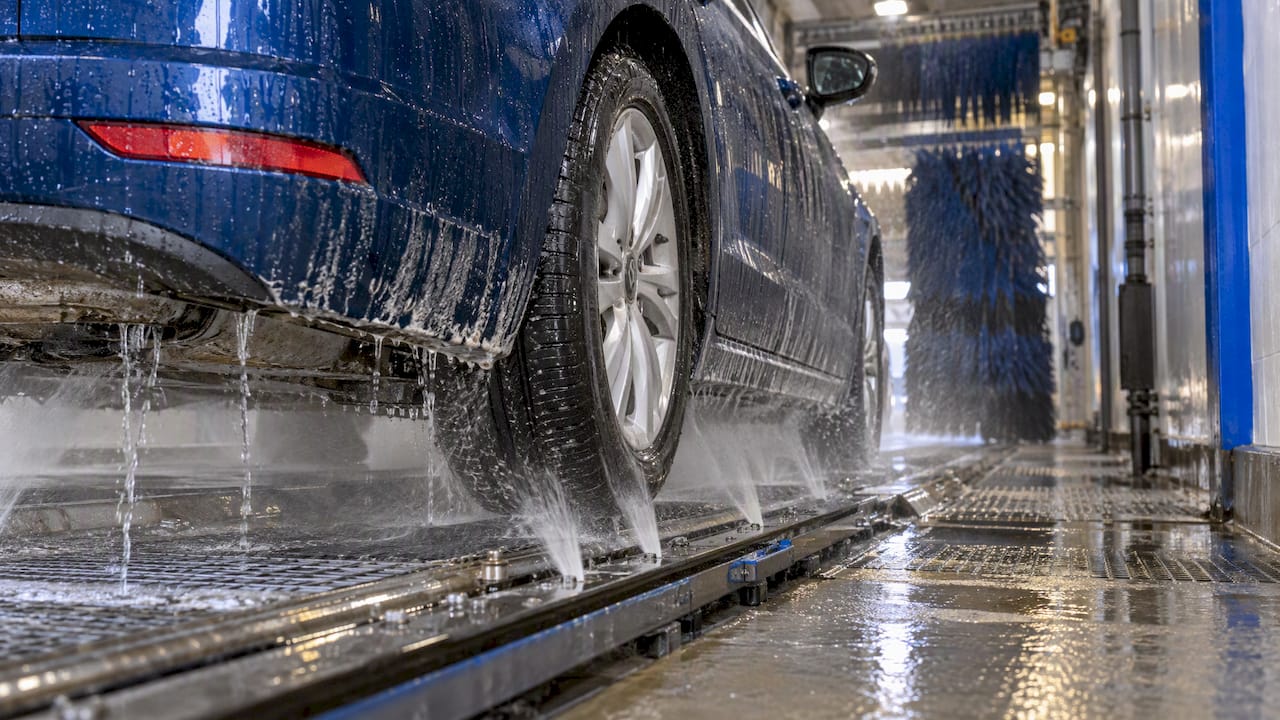
In the snow belt, rotors face salt for months. Salt keeps the metal damp and speeds up the chemistry. Washing the underside matters: the same bulletin lists regularly washing the undercarriage to remove salt as a way to help protect brakes from rust.
Rotor design
Uncoated rotors rust everywhere the pads do not sweep. Coated rotors protect the non-contact areas, such as the hat, vanes and edges, so the rust there is minimized, while the friction face still cleans up in use.
When rust is a real problem
A light orange film that wipes off with a few stops is not a defect. These signs mean it is more than that.
| What you notice | What it can mean | What to do |
|---|---|---|
| Orange tint that clears after a few stops | Normal surface rust | Drive normally |
| Rust that stays on the friction face after regular driving | More than surface rust, possible braking system issue | Have the brakes inspected |
| Pulsing in the pedal or steering wheel when braking | Thickness variation from corrosion or uneven deposits | Inspection, rotor service or replacement |
| Pits, flaking, swelling or layers peeling | Advanced corrosion | Replace rotors, and pads as advised |
| Persistent grinding, squealing or longer stopping distance | Worn or damaged pads or rotors, or corrosion | Stop driving hard, get a professional check |
| Car pulls to one side, or a wheel feels hot and drags | Possible stuck pad or caliper | Inspect before driving further |
The Vermont inspection bulletin is blunt about the line between normal and not: surface rust that does not come off with normal driving indicates a problem with the braking system, or more than surface rust on the rotor, and swelling, delamination or pitting compromise braking efficiency and safety.
Why advanced corrosion matters
Rust is not just ugly when it goes deep. A review of gray cast-iron discs states that corrosion can negatively affect braking performance, safety and reliability. A laboratory study in the journal Wear found that corrosion acted as an abrasive and reduced the friction coefficient, which is a technical way of saying the pad and rotor grip less predictably.
Corrosion stiction
There is also a less visible issue. When a car sits with the parking brake set in damp air, corrosion products can form where the pad meets the rotor. The same review describes how this corrosion stiction can bond the pad strongly to the rotor. Research on the problem has found that vehicles with electric parking brakes are especially vulnerable because they apply higher pad pressure against the rotor than conventional parking brakes. In practice, if the car will sit for a while in wet weather and you have a manual parking brake, ask your technician or owner’s manual whether to use it, and follow their guidance for your vehicle.
What to do about rusty rotors, step by step
- Look first. Check the swept face of each rotor. An even orange haze is fine. Deep grooves, scale, pitting or a lip at the edge are not.
- Drive off gently. Make your first few stops of the day light and early, in a safe, clear spot, so the pads can wipe the film away.
- Burnish if it lingers. The federal service document describes cleaning braking surfaces with 10 to 15 moderate stops from 35 to 40 mph, with cooling time between stops. Do this only where traffic and road conditions allow, and never to the point of overheating the brakes.
- Do not test hard braking if something feels wrong. If the pedal pulses, the car pulls, noise persists or stopping feels weaker, skip the experiments and get a professional inspection from a qualified brake technician.
- Keep sprays off the friction surfaces. Lubricants and penetrating oils can contaminate pads and rotors. If you are unsure what to use on brake parts, ask a technician rather than guessing.
- Replace parts that are past saving. Pitted, flaking or severely scored rotors, and pads that have absorbed rust or contamination, are replaced, not cleaned.
DIY owners should remember that brakes are a safety system. If you are not sure about a symptom, a shop inspection is cheap compared with the cost of a failure.
How to reduce rotor rust
You cannot stop iron from reacting with water, but you can limit how much of it builds up.
- Drive the car. Regular use keeps the pads sweeping the rotors. Short trips that never involve braking do little.
- Wash the undercarriage in salt season. Rinse the wheel wells and underbody after snow and salt, as the inspection bulletin recommends.
- Avoid long damp parking when possible. Covered or garaged storage cuts exposure. For long storage, ask a technician about the right parking brake practice for your vehicle.
- Use the friction brakes on an EV. Occasional firm, safe stops help clear surface rust and salt.
- Choose protected components. Corrosion-resistant coatings on non-contact areas, and pads built to handle moisture, address the problem at the source rather than after the fact.
- Replace pads and rotors together. Matched parts wear in together and the surfaces clean up evenly.
Our perspective: weather is a braking problem, not just a driving problem
We build brake parts around one idea: weather changes how brakes behave, and that should be designed for rather than tolerated. Rain, humidity, road salt, freezing mornings and summer heat each attack a different part of the system. Moisture affects the pad and the rotor face, salt eats at the iron, and temperature swings affect caliper movement.
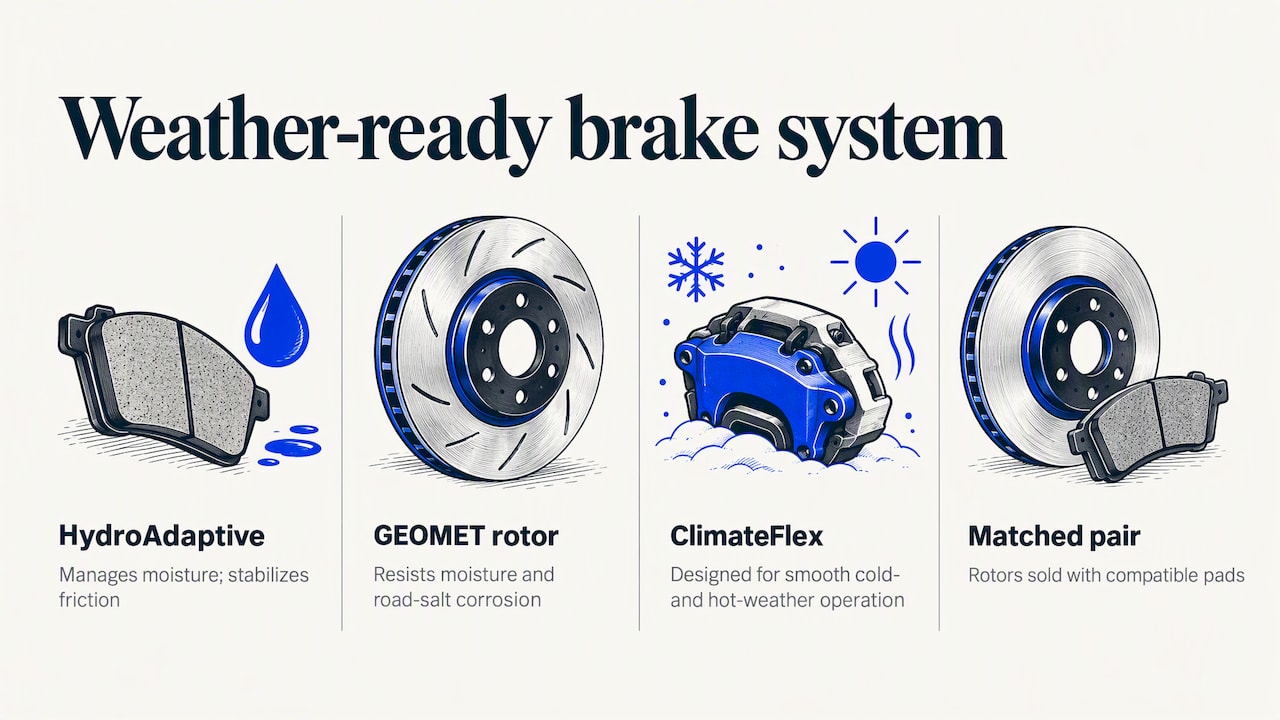
That is why we treat pads, rotors and calipers as a system. Our HydroAdaptive pads are engineered for moisture management and stable friction. Our GEOMET-coated rotors are made to resist corrosion from moisture and road salt. Our ClimateFlex calipers are designed to keep operating smoothly through winter cold and summer heat. We develop rotors and pads as a matched pair, which is why we sell rotors only as part of kits with compatible pads.
Our honest view of rotor rust: a light orange film after rain is not a reason to panic, and no brand can make iron immune to water. What you can ask of your brakes is a predictable response, rust that stays on the surface and clears quickly, and protection where the pads never reach. That is the standard we engineer to.
— AAA
Brake kits built for wet and salty roads
If your rotors are pitted, flaking or no longer clearing after normal driving, replacing them with matched pads is the fix. Our kits pair HydroAdaptive ceramic pads with rotors sized and matched for your vehicle, and our GC Type rotors carry a GEOMET coating to protect against moisture and road salt corrosion. Parts are matched by vehicle, so you pick your make, model and year and get components that fit together.
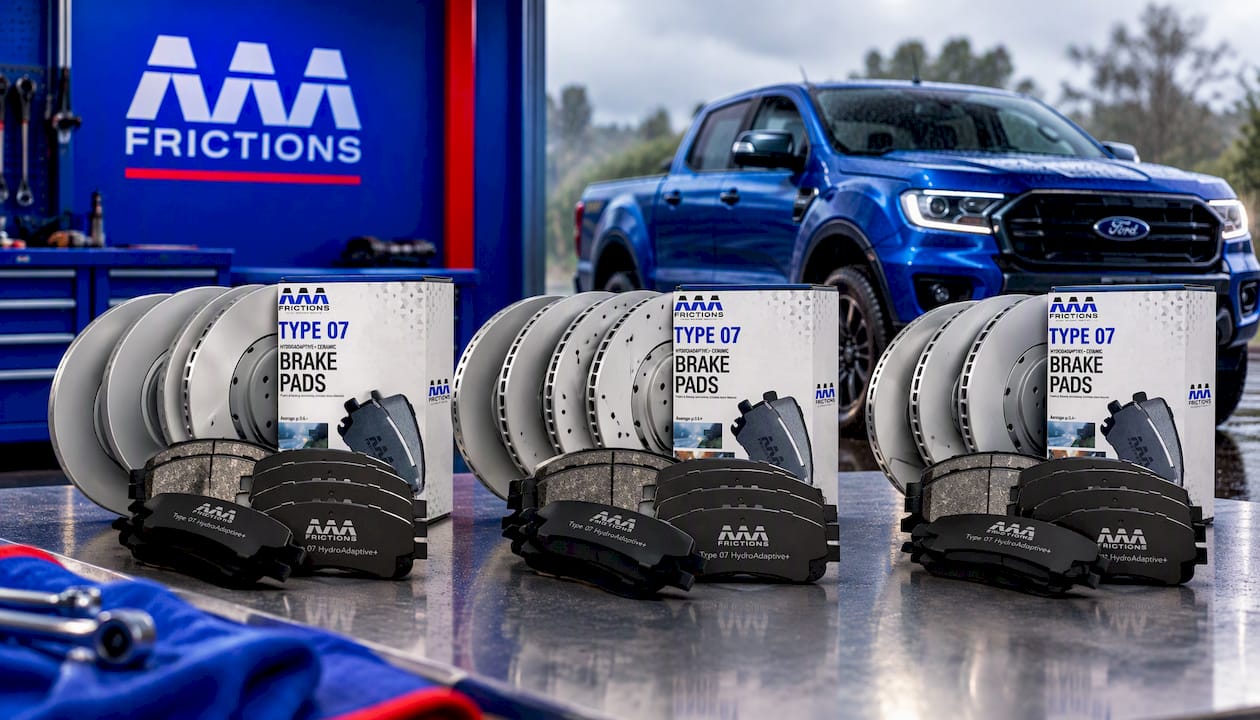
Browse the GC Type GEOMET-coated rotors, see the Type 07 brake pads, or start from the AAA Frictions store to find the kit for your vehicle. For rear-axle replacements on vehicles that rarely use their friction brakes, look at kits such as the rear brake kit for the Honda Ridgeline.
Frequently asked questions
Is it normal for brake rotors to rust after rain?
Yes. Bare cast iron starts to oxidize within hours of getting wet, and humidity alone can do it. Light surface rust that disappears after a few stops is normal. If it does not come off with ordinary driving, have the brakes inspected.
Is it safe to drive with rusty rotors?
With a thin orange film that clears in the first stops, yes. With deep pitting, flaking, a pulsing pedal, persistent noise or weaker braking, no: get a professional inspection first, and do not test hard braking to see what happens. Those signs can mean the rotor is no longer just surface rusty.
Can I spray WD-40 or another lubricant on rusty rotors?
We advise against putting any lubricant or penetrating spray on pads or rotor faces. Contamination can reduce friction where you need it most. If you are tempted to treat the rotor, ask a brake technician instead, and replace the parts if rust is severe.
Why do my rotors rust so quickly compared with other cars?
The usual causes are low brake use, long outdoor parking, humid climates and road salt. Electric vehicles are prone to it because regenerative braking reduces how often the pads sweep the rotors. Uncoated rotors also rust visibly on the hat and edges, where pads never reach.
Sources
- Corrosion Stiction in Automotive Braking Systems (MDPI Materials, 2023)
- Service document on brake rotor corrosion and burnishing (NHTSA, 2024)
- Inspection Station Bulletin 24-2 (Vermont DMV, 2024)
- Effects of humidity and corrosion on tribological behavior (Wear, 2014)
- Root cause study of corrosion stiction by brake pads (Engineering Failure Analysis, 2021)