

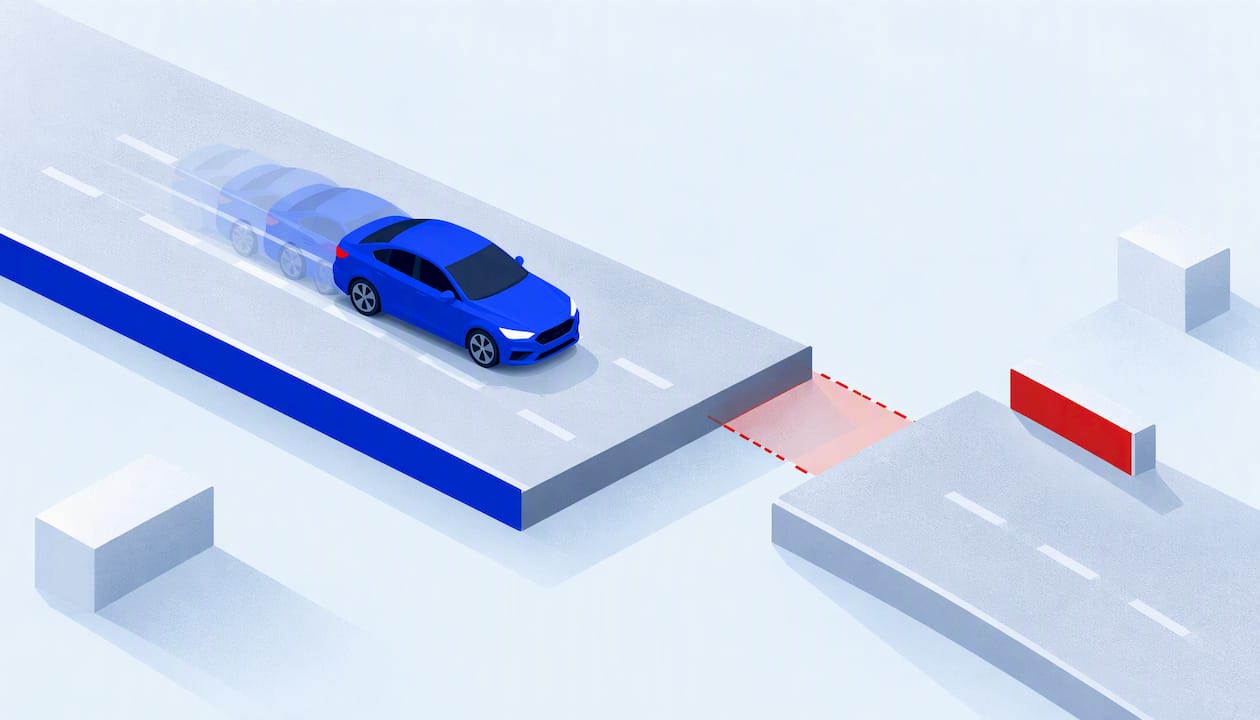
If your brakes are taking longer to stop the car, the cause is usually one of five things: worn pads or rotors, aging or contaminated brake fluid, a sticking caliper, tires that can’t grip, or extra speed and weight. A few of those are routine fixes. A soft pedal, a pedal that sinks, or a pull to one side means the car should not be driven until it is inspected. This guide helps you sort out which situation you are in, what to do right now, and how to get consistent braking back.
TL;DR
- Longer stops most often come from worn pads, worn or corroded rotors, old or moisture-laden brake fluid, a sticking caliper, or tires with poor grip.
- A spongy pedal, a pedal near the floor, grinding, pulling to one side, or a brake warning light means stop driving and get the car checked.
- Wet roads can double stopping distance, and snow or ice can make it far worse, so some of the “longer stop” you feel may be the road, not the brakes.
- Speed matters most: braking distance grows with the square of speed, so 60 mph needs about four times the braking distance of 30 mph.
- Replacing pads and rotors together, matched to your vehicle, restores a consistent pedal and bite.
Table of Contents
- First, separate brake problems from road and driver factors
- The brake-system causes, from most to least common
- Tires and road conditions: the part many drivers miss
- Speed and weight change everything
- Warning signs: what your car is telling you
- What to do right now
- How a mechanic finds the cause
- Getting consistent stopping power back
- Ready to replace worn brakes?
- Keeping stops short: habits that help
- FAQ
- Sources
First, separate brake problems from road and driver factors
Total stopping distance is the sum of three parts: the distance you travel while perceiving the hazard, the distance while you react, and the distance the brakes need to stop the car, as the Rhode Island DMV explains. Only the last part is the brake system’s job.
That matters because a stop can feel longer for reasons that have nothing to do with worn parts. Brake, a UK road safety charity, notes that the Highway Code assumes a 0.67-second reaction time while academic literature suggests an average closer to 1.5 seconds, which adds noticeably to total distance. Tired, distracted or hurried driving stretches the first two parts of the stop.
A quick self-check helps you sort it out:
- Is it only in the wet or cold? Then look hard at tires and pavement conditions before blaming the brakes.
- Is it all the time, on dry roads, at a steady speed? Suspect the brake system itself.
- Did it start after a heavy load, a long downhill, or a recent repair? Think overload, overheating, or air in the lines.
- Does the pedal feel different? A change in pedal feel is more telling than a change in distance.
The brake-system causes, from most to least common
Worn brake pads
Pads are the friction material that clamps the rotor. As they thin, they carry less heat away and the system loses bite, so you press harder and still stop later. Wear is gradual, which is why many drivers adapt without noticing. Our guide to how long brake pads last and what wears them covers typical wear patterns, and the biggest accelerators are stop-and-go commuting, heavy loads and towing.
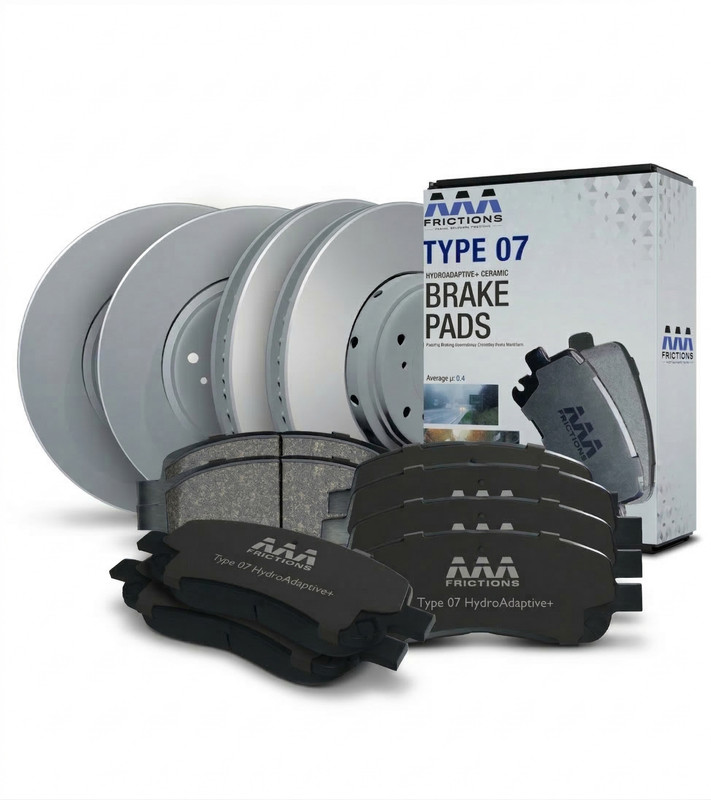
Grinding is the late-stage sign. Michelin lists grinding, which points to metal-on-metal contact, among the symptoms of brake trouble, alongside a spongy pedal, pulling to one side, a pedal sitting lower than normal, and a dashboard warning light.
Glazed, warped or corroded rotors
Rotors that are rusted, grooved, or glazed from overheating give pads an uneven surface to grip. Road salt and constant moisture speed up corrosion, which is a particular issue in snowbelt states. Corroded rotors can cause vibration, uneven bite and a longer stop, even with fairly fresh pads. Pads and rotors wear as a pair, so replacing one without the other often leaves you with the same complaint.
Old or contaminated brake fluid
Brake fluid transfers your foot’s force to the calipers. Over time it can take on moisture, and heat can then create compressible bubbles in the system. The result is a soft, spongy pedal that sinks further than it should. Air that enters the lines after a repair produces similar symptoms. This is where bleeding comes in: a technician flushes or bleeds the system so only fluid, not air, sits in the lines.
If your pedal changed after a pad swap or any hydraulic work, tell the shop. If you press and hold the pedal with the engine running and it slowly sinks, that is a hydraulic fault and needs professional attention before you drive.
A sticking or seized caliper
Calipers push the pads against the rotor and must release cleanly. A caliper that sticks can cause a pull to one side, uneven pad wear, a burning smell, and heat that reduces braking performance. The New York Attorney General says light smoke from a wheel indicates a stuck brake and advises having the vehicle towed for repair. Cold winters and hot summers both stress caliper hardware, which is one reason we design for temperature swings.
Brake fade from overheating
Long downhill runs, towing, or repeated hard stops can overheat the system and temporarily cut braking power. Continental Tires describes brake fade as reduced or lost braking capability from overheating and advises stopping in a safe place, letting the system cool fully, and having it checked before you continue.
A failing brake booster or hose
A pedal that is hard to push while the car still stops can point to a vacuum booster problem, while a pedal that goes soft can point to a leaking line or master cylinder. Neither is a driveway guess. Both need a technician.
Tires and road conditions: the part many drivers miss
Brakes only slow the wheels. Tires and pavement do the work of slowing the car. The Federal Highway Administration states that water on the pavement significantly reduces tire-pavement friction, and a drop in friction increases stopping distance. Its guidance puts the effect in numbers: as little as 0.002 inches of water can cut the friction coefficient by 20 to 30 percent.
Queensland’s transport department gives a useful comparison: a modern vehicle with good brakes and tires can stop at around 7 m/s², and the friction coefficient is roughly 1 on a dry road versus roughly 0.7 on a wet one, according to its stopping distance guidance.
The practical numbers for US drivers:
| Condition | What changes | Source |
|---|---|---|
| Wet pavement | Stopping distance can double; reduce speed by about one-third | Georgia DDS |
| Standing water | Hydroplaning can start at speeds as low as 30 mph, more likely with low pressure or worn tread | Georgia DDS |
| Snow or ice | Stopping distances can be up to ten times greater than on dry roads | UK Highway Code |
If your “longer stop” shows up mostly in rain or cold, check tire tread depth and tire pressure first. Worn tread and low pressure make hydroplaning more likely, per the Georgia guidance above. Brakes that stay consistent in moisture and cold are the other half of the equation, and that is the problem we build for.
Speed and weight change everything
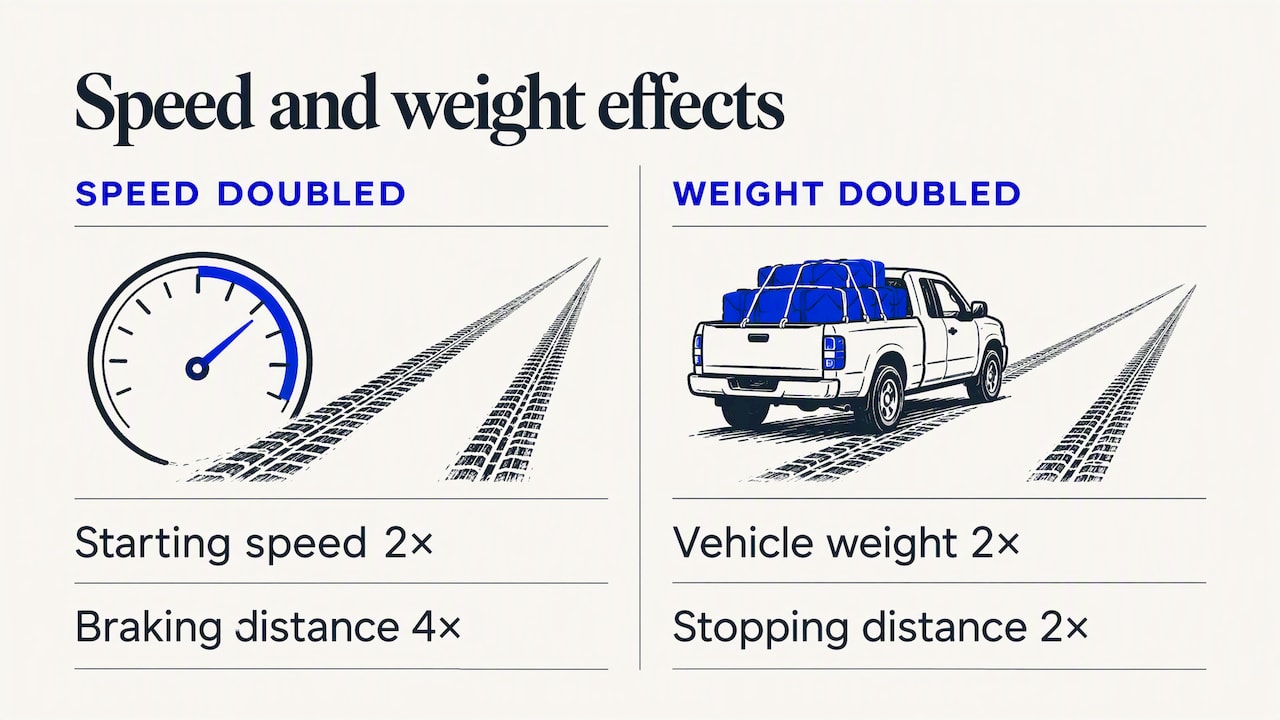
Braking distance is proportional to the square of the starting speed, Brake explains. Double your speed and the braking distance quadruples. A small bump in speed produces a big jump in the distance you need.
Weight works too. The Ontario government’s Official Air Brake Handbook, written for commercial vehicles, states that doubling vehicle weight doubles stopping distance and that overloading can prevent a vehicle from stopping safely. The principle applies to your SUV or pickup too: a full cargo area, a roof box, a trailer, or a van full of delivery packages asks more of the same brakes.
For larger vehicles and high-mileage drivers, such as rideshare and delivery work, this is the usual story. Heavy loads, constant stop-and-go and long hours wear friction material faster, so the stop that was fine at 20,000 miles can feel different at 50,000.
Warning signs: what your car is telling you
Pay attention to a cluster of symptoms rather than one:
- Spongy or soft pedal. Suggests air or moisture in the fluid, or a hydraulic leak.
- Pedal closer to the floor than usual. Suggests worn pads, a fluid problem or a failing master cylinder.
- Grinding or metal-on-metal noise. Pads worn through to the backing plate.
- Pulling to one side. Uneven braking, often a sticking caliper or a collapsed hose.
- Vibration through the pedal or wheel. Rotor condition.
- Brake warning light. Our guide on why your brake light is on explains what each light can mean.
What to do right now
If the brakes feel weak while you’re driving
Stay calm, slow down early, and increase your following distance. Find a safe place to stop. Michelin advises that if the pedal is soft or spongy, do not continue driving: pull over safely and call for assistance.
If the brakes fail outright
Pennsylvania’s driver services advise shifting to a low gear, pumping the brake pedal quickly, and finding a safe place to stop. After you stop, call for help and don’t try to drive, per its emergency driving tactics. Michelin adds engine braking and gradual use of the parking brake. We cover the full sequence in what to do when brakes fail.
If the car still stops but takes longer
Don’t wait for it to get worse. Book an inspection this week, avoid highways and heavy loads until then, and leave extra space. If you smell burning, see smoke from a wheel, or the pedal sinks while held, have the car towed.
How a mechanic finds the cause
A good diagnosis is mostly methodical looking and measuring:
- Road test to feel the pedal, pull, noise and vibration.
- Pedal test: press and hold with the engine running to check for sinking or a hard pedal.
- Wheel-off inspection of pad thickness, rotor surface and thickness, caliper slide movement and hoses.
- Fluid check for level, color and moisture content, plus a look for leaks at lines, calipers and the master cylinder.
- Bleeding or flushing when the pedal is spongy and the cause is air or old fluid. Bleeding is done after a hydraulic repair, and sometimes on its own when fluid is contaminated.
Ask the shop for measurements, such as pad thickness and rotor thickness against the minimum, rather than a general verdict. If you do your own brake work, bleed carefully, follow your vehicle’s service manual, and have the pedal confirmed firm before you drive anywhere.
How we think about brakes that take longer to stop
Most people notice a longer stop only when something startles them. By then the cause has usually been building for months, and weather is often what exposes it. Moisture on the pads, corrosion on the rotors and stiff, cold calipers all change how a brake behaves from one morning to the next.
That is why we design parts around consistency, not just peak performance. Our HydroAdaptive ceramic pads are engineered for moisture management and stable friction. Our GEOMET-coated rotors are designed to resist corrosion from moisture and road salt. Our ClimateFlex calipers are built for smooth operation through winter cold and summer heat.
We develop pads and rotors as a matched system, which is why rotors are sold only as part of brake kits with compatible pads. A fresh pad on a tired rotor rarely gives the pedal you expect. Replacing both, matched to your vehicle, is how we aim to give you predictable braking in any weather. You can see the thinking on our technology page.
AAA
Getting consistent stopping power back
Once the inspection shows worn friction parts, the repair is straightforward. A few principles keep the fix lasting:
- Replace pads and rotors together when the rotors are worn, corroded or grooved. New pads bed in best on a clean, true surface.
- Match parts to your exact vehicle, year, model and axle. Front and rear need different parts.
- Replace sticking calipers, not just pads, if the slides or pistons are seizing.
- Refresh the brake fluid if the technician finds it contaminated.
- Follow the bed-in procedure for new pads so the friction surfaces mate properly.
- Check tires at the same visit, since tread depth and pressure decide how much of your braking force the road can use.
Matching the repair to your vehicle
Our kits are sold by vehicle, so you pick your make, model and year and get the compatible set. For example, we offer front and rear kits for the Honda Pilot and the Mazda 3 Sport, and a rear kit for the Honda Ridgeline. For other vehicles, use the site search to find your fit.
Ready to replace worn brakes?
If your inspection points to worn pads and rotors, our weather-adaptive kits pair HydroAdaptive ceramic pads with rotors designed for moisture and road salt, so your braking stays consistent from rainy commutes to freezing mornings.
Browse Type 07 brake pads, GC Type GEOMET-coated rotors, or find your vehicle’s kit on aaafrictions.com. Not sure which fits? Our Type 03 pads with SC rotors kit is another option to compare.
Keeping stops short: habits that help
- Leave more room. Your following distance is the cheapest brake upgrade. Cut speed by about a third on wet roads, as Georgia’s guidance recommends.
- Slow before hills and curves, and use a lower gear on long descents to keep the brakes from overheating.
- Don’t overload. Remove roof boxes and cargo you don’t need.
- Inspect on a schedule. Ask for pad and rotor measurements at every tire rotation.
- Mind winter. Salt, slush and freezing mornings are hard on rotors and calipers, so inspect before and after the season.
FAQ
Why are my brakes taking longer to stop even though the pedal feels normal?
A normal pedal with a longer stop often points to worn pads, glazed or corroded rotors, or tires that can’t grip. Heavier loads and higher speeds also add distance, since braking distance rises with the square of speed. A technician can measure pad and rotor thickness to confirm.
Is it safe to drive with a spongy brake pedal?
No. A soft or spongy pedal can mean air or moisture in the fluid or a leak, and it can get worse without warning. Pull over safely and call for assistance rather than continuing to drive. Have the system inspected, and bled if needed.
Do I need to bleed my brakes if they take longer to stop?
Only if the cause is air or contaminated fluid, which usually shows up as a spongy pedal or one that sinks. If the cause is worn pads or rotors, bleeding won’t help. Bleeding is also normal after hydraulic repairs such as caliper replacement.
Can rain or cold make my brakes slower to stop?
Yes, mostly through the road and tires. Water can cut pavement friction by 20 to 30 percent, and wet roads can double stopping distance. Brakes designed for moisture and temperature swings help keep the pedal feel consistent, but slower speeds and good tires still matter.
Should I replace just the pads or the rotors too?
If the rotors are worn below minimum thickness, grooved, or corroded, replace them with the pads. New pads on a poor surface bed in unevenly and can leave you with the same weak, inconsistent stop.
Sources
- Stopping Your Vehicle, Rhode Island DMV
- Stopping distances, Brake
- Driving Emergencies: If Your Brakes Stop Working, Michelin
- Repair and maintenance, New York Attorney General
- Brake fade: causes, symptoms and how to help prevent it, Continental Tires
- Chapter 2. Driver, Vehicle, and Roadway Characteristics, FHWA
- Stopping distances: speed and braking, Queensland Government
- Section 2.6, Georgia Department of Driver Services
- The Highway Code: Driving in adverse weather conditions, GOV.UK
- Demands on Brakes While Driving, Official Air Brake Handbook, Ontario
- Emergency Driving Tactics, Pennsylvania Driver and Vehicle Services