

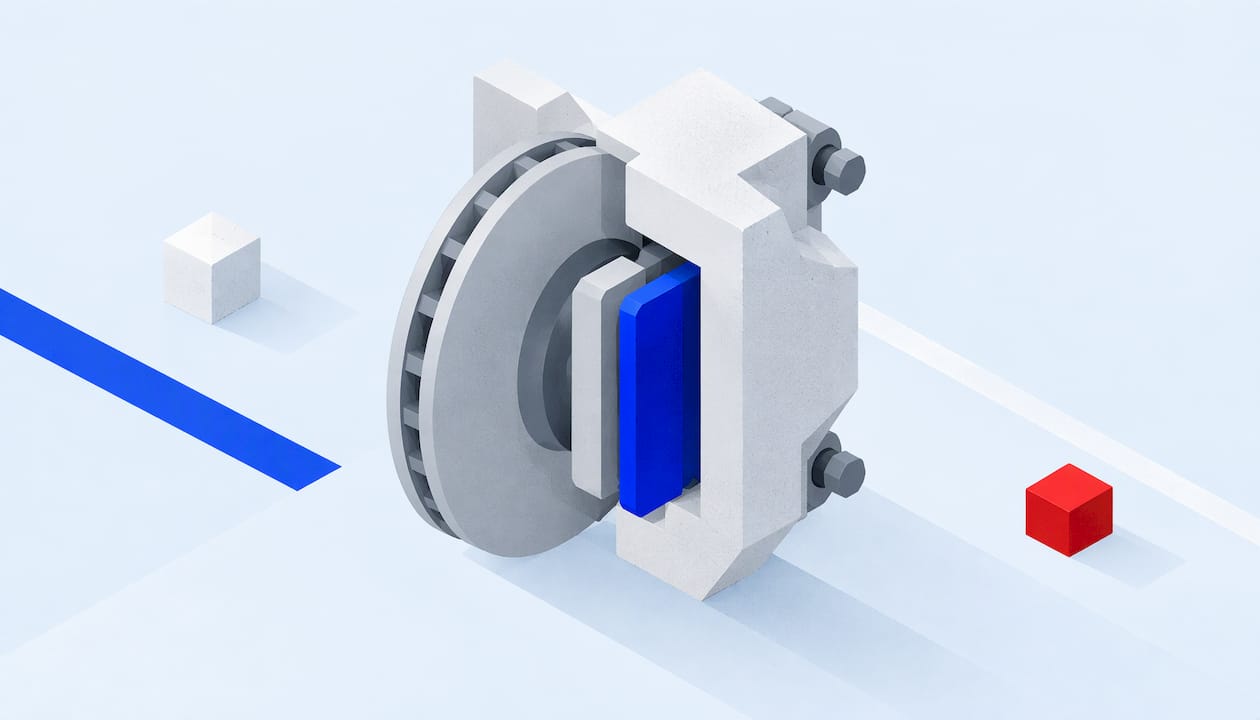
The most common symptoms of a bad brake caliper are the car pulling to one side, a wheel that stays hot or drags after you release the pedal, a burning smell, uneven pad wear, fluid near a wheel, and a pedal that feels soft or inconsistent. Any one of these can come from a sticking, seized or leaking caliper, and some can also come from pads, rotors, hoses, bearings or tires. Below you will find each symptom explained, a simple way to narrow down the cause, and clear guidance on when to stop driving.
TL;DR
- Pulling to one side, a hot wheel, a burning smell and fast, uneven pad wear are the classic signs of a sticking caliper.
- Fluid at a wheel, or a pedal that sinks or feels spongy, points to a leak. Treat that as a stop-driving problem and get the car inspected.
- Smoke from a wheel means pull over safely, shut the car off and arrange a tow.
- A stuck caliper rarely cures itself. If it frees up, it can seize again, so the cause needs fixing.
- Calipers work with the pads and rotors around them, so inspect the whole wheel end, not one part.
Table of Contents
- What a brake caliper does, and why it fails
- The main symptoms of a bad brake caliper
- Sticking, seized and leaking: how the symptoms differ
- How to check whether it is the caliper
- When to stop driving
- Can a stuck caliper fix itself?
- Cold weather and calipers
- Our perspective
- Replacing a bad caliper the right way
- Fix it with parts built for weather
- Preventing caliper problems
- FAQ
- Sources
What a brake caliper does, and why it fails
The caliper is the clamp that sits over the rotor. When you press the pedal, hydraulic pressure pushes a piston (or pistons) out of the caliper, and that squeezes the pads against the spinning rotor. When you release the pedal, the piston retracts slightly and the caliper slides on its pins so the pads let go evenly on both sides.
That sequence depends on two moving parts staying free: the piston and the slide pins. Moisture, road salt, dirt and heat attack both. According to Haynes Manuals, dragging or binding brakes can come from a sticking piston, skewed or seized pads, seized slide pins on single-piston calipers, or pads that stick to the disc after the car sits in a damp environment.
Inactivity matters too. Haynes Manuals UK notes that the main cause of seized brakes is a vehicle sitting for a long time, especially outdoors, when pads stick to a disc coated in surface rust, particularly after rain. If you park a car for weeks in wet weather, this is the first thing to suspect when it drives badly afterward.
The main symptoms of a bad brake caliper
The car pulls to one side
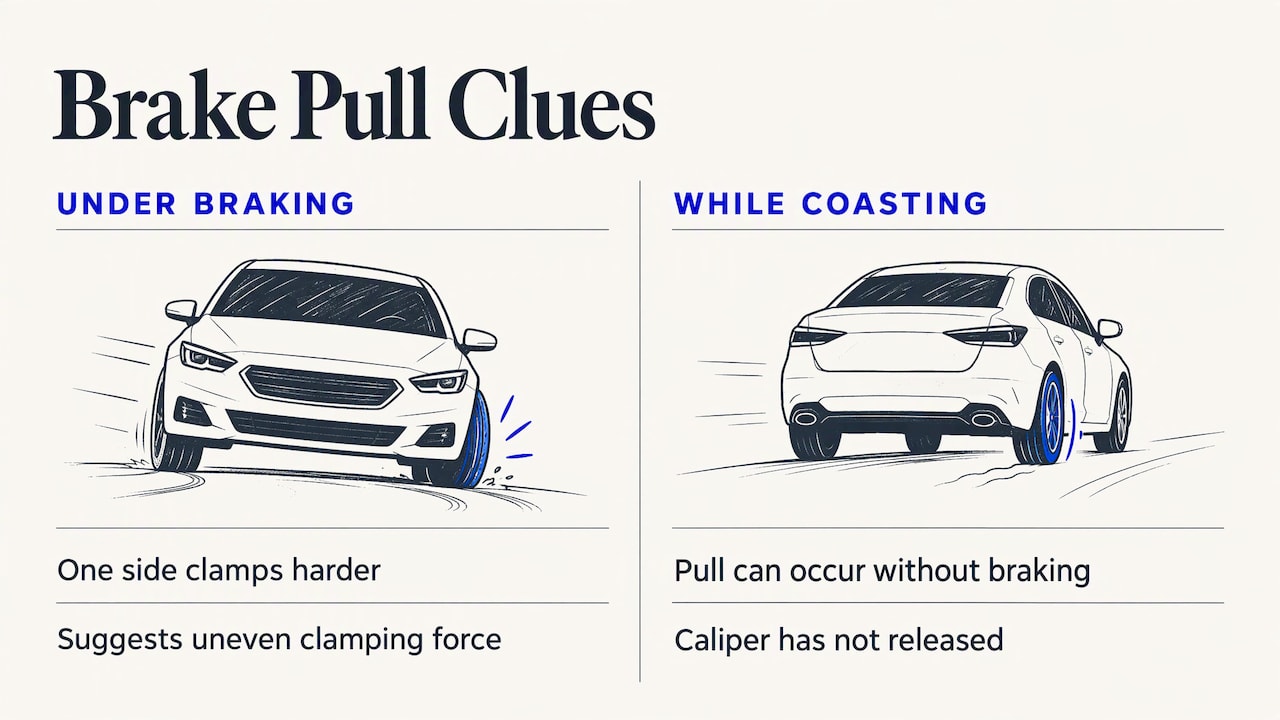
If the car drifts left or right while you brake, one side is clamping harder than the other. A caliper that is partly seized on one wheel can do this. A stuck caliper can even cause a pull when you are not braking at all, because that wheel is being held back constantly. Brake & Front End recommends using a hard brake application and comparing wheel temperatures to separate a brake pull from a steering or suspension problem.
Note which situation you see. A pull only under braking suggests uneven clamping force. A pull while coasting or cruising suggests a caliper that has not released.
Drag, sluggishness and poor fuel economy
A caliper that holds the pads on the rotor after you lift off the pedal works like a parking brake you did not set. You may notice the car feels lazy pulling away, needs more throttle to keep speed, or returns worse mileage than usual. Another telltale sign, per the Hamilton Tires guidance in our research, is that the car rolls poorly when shifted to neutral on a flat surface.
On a rear caliper, the drag can be subtle, so watch for a general loss of pep rather than anything dramatic.
One wheel hotter than the others
After a normal drive, the front wheels will be warm because they do most of the braking. What you do not want is one wheel that is much hotter than its partner on the same axle. A wheel that is too hot to hold your hand near, compared with the opposite side, is a strong sign of a dragging brake. A cheap infrared thermometer makes the comparison objective: measure each rotor face after a drive and compare left with right.
A burning smell
A sharp, acrid smell after driving, like hot metal or overheated friction material, usually means a pad is rubbing continuously. If you smell it and also see smoke, stop. We cover that below.
Uneven brake pad wear
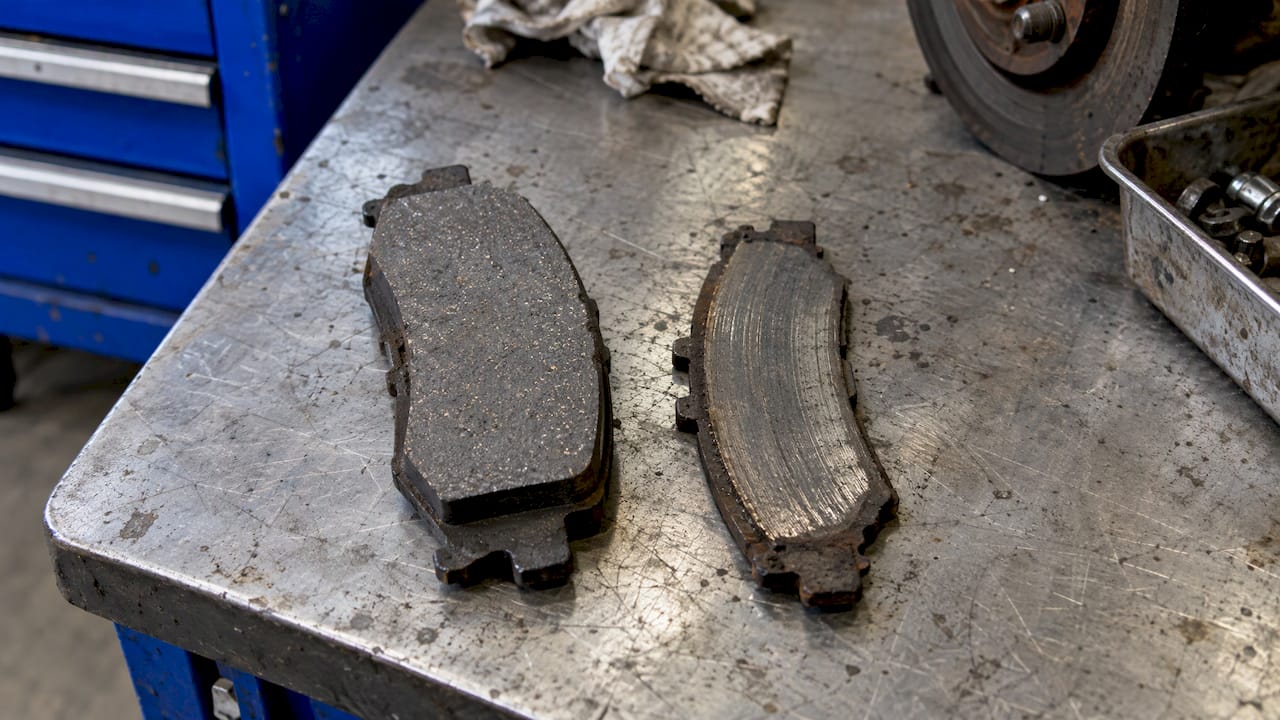
When the pads are pulled off the shelf, a healthy set wears fairly evenly. A caliper with seized slide pins pushes the pad only from the piston side, so the inner pad wears much faster than the outer one. Haynes Manuals UK describes this: the car can seem to drive normally while braking ability is reduced and the inside pad wears faster. If you keep finding one wheel worn out well before the others, read our guide to uneven brake pad wear for the full diagnosis.
Noises: squealing, grinding, clunking
A persistent squeal from one wheel can mean a pad is dragging lightly. Grinding means friction material may be gone or something is binding hard. A clunk when you press or release the pedal can point to loose or worn caliper hardware. Noise alone does not prove the caliper is bad, but noise from one wheel combined with any symptom above makes the caliper a prime suspect.
Steering wheel shaking when you slow down
A stuck caliper can overheat a rotor, and an overheated rotor can discolor or warp. AAA Club Alliance says shaking while slowing may point to a stuck caliper, and that calipers can latch onto the rotor because of dirt or debris buildup. AAA recommends having a mechanic inspect the car immediately, since a stuck caliper can make the vehicle unsafe to drive.
Brake fluid leaking at the wheel
A caliper holds pressurized brake fluid, and its piston seal is the main thing keeping that fluid in. If the seal fails or a fitting loosens, you may see wetness on the inside of the wheel, a damp or oily patch on the inner wall of the tire, or drips under the car near a wheel. Brake fluid is typically clear to amber and slippery, and unlike water it will not dry off quickly.
A leak shows up in several ways:
- The brake fluid reservoir level drops over days or weeks with no pad-wear explanation.
- The pedal gradually sinks toward the floor or feels spongy.
- You find a wet, grimy film around the caliper body, the bleeder screw or the hose fitting.
- A brake warning light comes on. If that happens, our guide on why a brake light comes on walks through the causes.
A technician checks for leaks at the piston seal, the banjo bolt connection and the bleed screw. Do not drive a car with a brake fluid leak. A leak lowers system pressure, and the result can be longer stopping distances or loss of braking. See our article on what to do when brakes fail for how to respond in an emergency.
A soft pedal, or longer stopping distances
A spongy or sinking pedal, or a car that takes longer to stop, can come from a leak, air in the lines, worn components or a caliper that is not clamping properly. It is a safety symptom whatever the cause. If your car is stopping later than it used to, see brakes taking longer to stop for the full list of causes.
Extra brake dust on one wheel
One wheel that is dirtier than the others can mean its pads are working constantly. Alone, this is a weak clue. Combined with heat or pulling, it supports a sticking caliper.
Sticking, seized and leaking: how the symptoms differ
The three problems overlap, but each has a signature.
| Problem | What you notice | Typical cause |
|---|---|---|
| Sticking piston | Pull to one side, hot wheel, burning smell, drag | Corrosion on the piston or a worn seal that stops it from retracting |
| Seized slide pins | Car feels mostly normal, but weaker braking and fast wear on the inner pad | Rust, dried grease or dirt in the pin bores |
| Leaking caliper | Wet wheel, falling fluid level, soft or sinking pedal | Failed piston seal, loose banjo bolt or bleeder |
| Pads stuck to the rotor | Drag or grabbing after the car has sat, often after rain | Surface rust bonding pad to disc |
Because the repair for each differs, naming the right one saves money. A pin problem might be fixed with new hardware, while a corroded piston usually means replacing the caliper.
How to check whether it is the caliper
Several other parts can mimic caliper trouble. A brake inspection from HiTech Auto Repairs notes that pads, rotors, hoses, wheel bearings, tires and suspension can all cause some of the same symptoms, so inspect before you replace anything. Here is a sensible order.
- Compare wheel temperatures. After a normal drive with some braking, check each wheel with an infrared thermometer, or carefully with the back of your hand held near, not touching. A large difference between left and right points to the hot side.
- Spin test. With the car safely lifted and supported on jack stands, spin each wheel by hand. Front wheels should turn with light, even resistance from the pads. A wheel that is hard to turn, or that turns more freely only after the brake hose or bleeder is loosened, points to a binding caliper. Brake & Front End describes the bleeder test: if loosening the bleeder lets the wheel turn freely, the problem is in the hydraulic side of the caliper, and if it does not, look at the mounting hardware and piston for seizure.
- Look at the pads. Pull the wheel and compare inner and outer pad thickness. A big difference suggests slide pin trouble.
- Look for fluid. Check around the piston boot, hose fitting and bleeder for wetness. A torn dust boot with rust on the piston is a strong clue.
- Check the pedal. Do a simple pedal hold test with the engine running and the car stopped. A pedal that slowly sinks under steady pressure indicates a leak or an internal master cylinder problem. Have a technician confirm which.
If you are not equipped to lift and support a vehicle safely, skip steps 2 to 4 and have a shop do them. Always use jack stands, never a jack alone.
When to stop driving
Some symptoms are an inconvenience. Others are not.
- Smoke from a wheel: pull over as soon as it is safe, turn off the car and arrange a tow. Haynes Manuals warns that continuing to drive with an overheated, binding brake can cause a brake fire and damage the discs and wheel hub parts.
- Fluid at a wheel, or a pedal that sinks to the floor: do not keep driving. Have the car towed to a shop.
- Shaking or strong pulling while braking: AAA says to have the car inspected immediately.
- A mild pull with no smoke: drive gently and directly to a shop. Do not wait for it to get worse.
Can a stuck caliper fix itself?
Sometimes a stuck brake seems to let go after a few drives, especially when pads were just stuck to a rusty rotor after sitting. But if the cause is the piston or the slide pins, Haynes Manuals says there is a high likelihood the brake will seize again, and the options are a rebuild or replacement depending on how much corrosion there is. Treat a brake that frees itself as a warning, not a repair.
Once a binding brake has overheated, also inspect the pads and rotor. After the stuck pads are freed, the fix can involve resurfacing the disc and replacing the pads.
Cold weather and calipers
Winter makes caliper trouble more common. Wet slush and road salt find their way into piston boots and pin bores, then freeze overnight. If your brake drags only on cold mornings, our guide on a brake caliper frozen overnight explains the causes and safe next steps.
Our perspective
We design brake parts around one idea: weather is the thing that changes how brakes behave, so the parts should be built for it. Moisture, road salt and temperature swings are what attack calipers, pads and rotors, and they do it together.
That is why we think of the wheel end as a system. Our ClimateFlex calipers are designed for smooth operation through winter cold and summer heat. Our HydroAdaptive ceramic pads are designed to manage moisture and keep friction stable. Our GEOMET-coated rotors are designed to protect against corrosion from moisture and road salt.
When one part of that system is matched to the others, the whole brake tends to release evenly and wear evenly. That is the reason we sell rotors only as part of kits with compatible pads, and why we match parts to your specific vehicle.
If you are replacing a caliper, replace the pads and rotor at the same time so the new caliper is working against a fresh, matched surface.
AAA
Replacing a bad caliper the right way
Once the caliper is confirmed as the problem, replace calipers in pairs on the same axle when you can, so the clamping force stays balanced side to side. Flush the old fluid and bleed the system afterward. Fit new pads and rotors with the caliper if the old ones were overheated or unevenly worn.
If the failed caliper is on the rear axle, our walkthrough of rear brake caliper replacement covers steps, costs and pitfalls, including the parking brake mechanism that many rear calipers integrate.
Fix it with parts built for weather
If corrosion and moisture killed your last caliper, replacing it with the same thing invites a repeat. Our ClimateFlex brake calipers are designed for smooth operation across cold and heat, and our kits pair them with matched pads. The Type 03 brake pads and ClimateFlex calipers kit is one way to replace the caliper and pads together. Our parts are matched by vehicle, so you enter your car and see what fits.
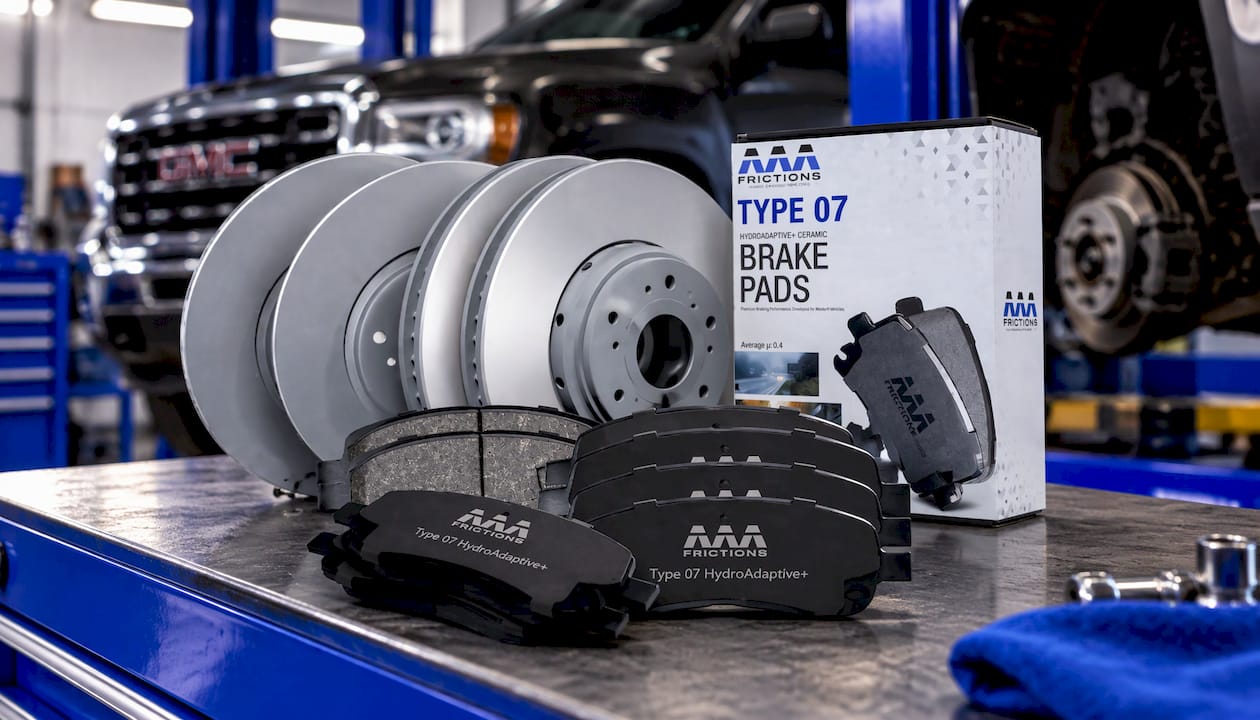
You can also browse everything on the AAA Frictions site, including Type 03 and Type 07 pads and GC and SC rotors sold in complete front and rear kits.
Preventing caliper problems
A few habits cut the risk considerably:
- Do not let a car sit for long in damp weather. Drive it regularly. If it must sit, expect to check for stuck pads when you start it again.
- Rinse off road salt in winter, including the wheel wells, and have brakes inspected each time tires are rotated or changed.
- Service the slide pins whenever pads are replaced: clean, inspect and lubricate with brake-specific grease.
- Replace torn dust boots and look for rust on the piston.
- Change brake fluid on the schedule in your owner’s manual, since old fluid absorbs moisture.
- Treat small symptoms seriously. A faint pull or one warm wheel is easier to fix before the rotor overheats.
High-mileage drivers such as rideshare and delivery drivers should add a quick hand-check of wheel temperatures after a long shift, because their brakes work harder and for longer.
FAQ
What are the first signs of a bad brake caliper?
Usually the car pulls slightly to one side, or one wheel runs hotter and you smell something burning after a drive. You may also find one pad worn far more than the others. Any of these merits a brake inspection.
Is it safe to drive with a sticking caliper?
Not for long. A dragging brake overheats the rotor and pads, can reduce braking ability and can lead to smoke or a brake fire. If you see smoke, pull over and arrange a tow. If the pull is mild, drive carefully straight to a shop.
Can a leaking caliper be repaired?
A leak from a loose fitting can sometimes be corrected by tightening or replacing the fitting and bleeding the system. A leak from a failed piston seal or corroded piston usually means a rebuild or replacement. Either way, have a technician inspect it before you drive.
How do I tell a bad caliper from a bad rotor or pad?
Compare wheel temperatures, then inspect pad wear and look for fluid. A hot wheel, uneven pad wear or a wet caliper points to the caliper. Pulsing without heat or drag points more toward the rotor. A shop inspection settles it.
Should I replace calipers in pairs?
It is a good practice. Replacing both calipers on an axle keeps clamping force matched side to side, and it is sensible to fit fresh pads and rotors at the same time.
Sources
- Haynes Manuals: How to diagnose and fix a seized brake caliper
- Haynes Manuals UK: How to unseize a brake caliper
- Brake & Front End: Finding the cause of brake pulls
- AAA Club Alliance: Why your steering wheel shakes
- HiTech Auto Repairs: Brake caliper failure symptoms
- Hamilton Tires: Signs of a bad brake caliper