

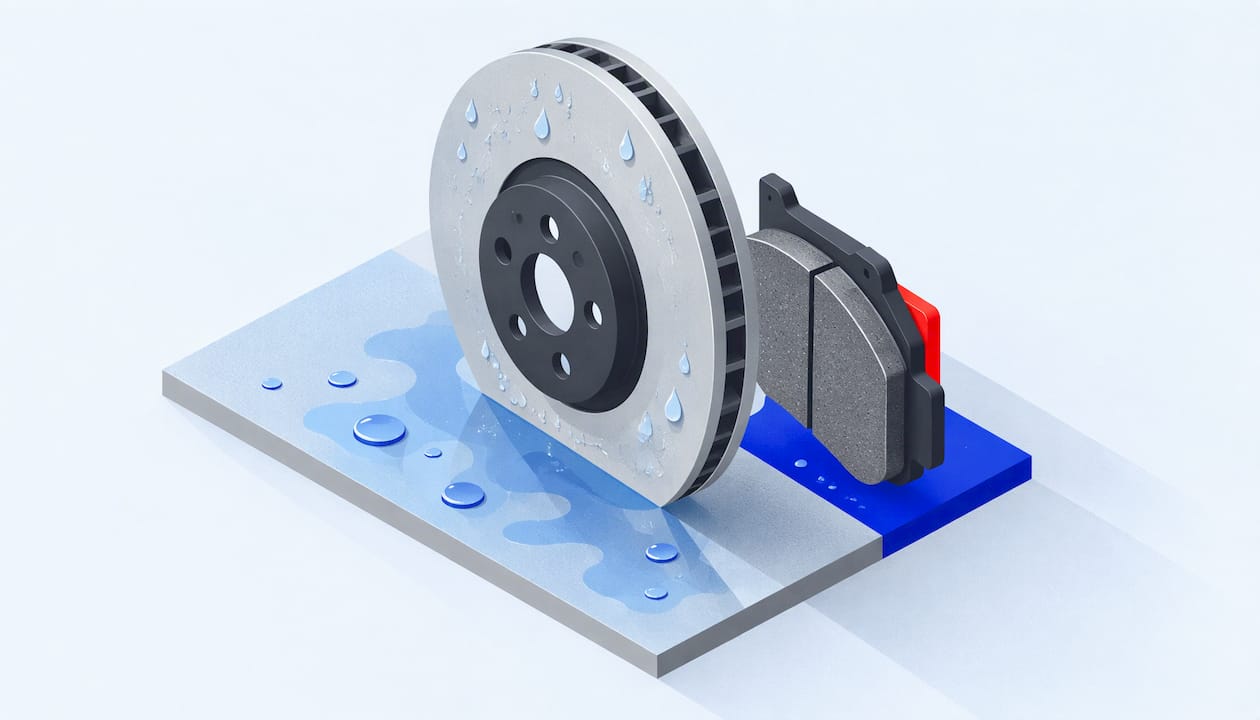
A brief grind or scrape on your first few stops after rain is usually a thin film of surface rust on the rotors being scraped off by the pads, and it fades once the brakes dry and warm up. A grind that stays after the first few stops, gets louder, or arrives with other symptoms is a different problem: worn pads, debris, or damaged rotors. Below is how to tell the two apart, what to do about each, and how brake parts built for wet weather, like ours, are designed to reduce the problem.
TL;DR
- Grinding or scraping on the first few stops after rain or overnight dampness is commonly caused by a thin layer of surface rust that the pads wipe off.
- If the noise disappears within a few brake applications, it is typically moisture. If it lasts several trips or gets worse, have the brakes inspected.
- Grinding with a longer stopping distance, a soft or hard pedal, vibration, pulling, a burning smell or a warning light means stop driving normally and get the car checked.
- Never spray WD-40 on pads or rotors. It can impair braking.
- Rotor coatings, moisture-managing pad compounds and keeping road salt off the underside all help prevent wet-weather noise.
Table of Contents
- Why brakes grind after rain
- Normal wet-weather noise or a real problem?
- A simple check you can do in your driveway
- What not to do: skip the WD-40
- Why some brakes grind in the wet more than others
- How to keep brakes quieter in wet and salty weather
- What we do about wet-weather braking
- Choosing the right set for a wet-weather driver
- Get a matched set for wet roads
- Our perspective
- FAQ
- Sources
Why brakes grind after rain
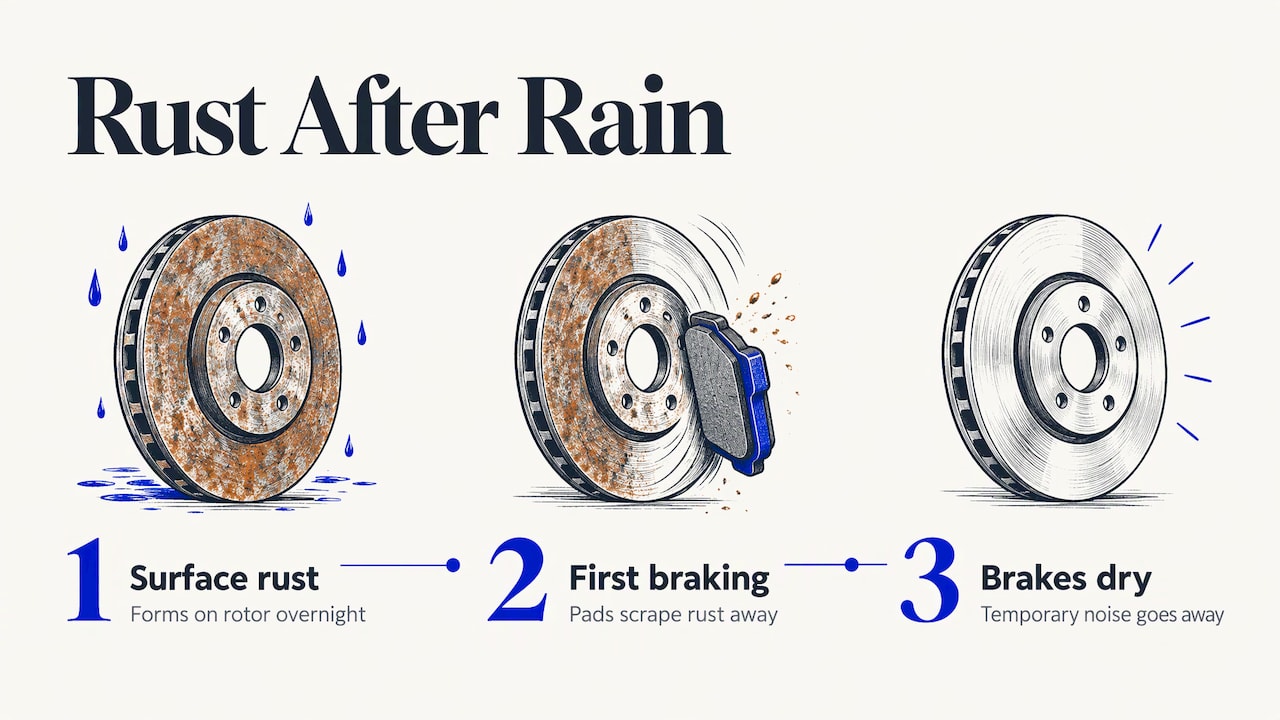
Cast iron rotors rust quickly. Moisture can leave a thin layer of surface rust on the rotor overnight, and the first few brake applications scrape it away, which creates temporary noise that goes away once the brakes are dry. Allstate describes the same pattern: brakes can hiss or grind when they have collected dew and rust, and the sound should go away as the pads clean the disc.
You will often see this as a light orange or brown tint on the rotor face. Little brown rust spots after rain or snow tend to be worn away quickly by the pads. If you want to know why rotors rust so fast and what is normal, see our guide on why brake rotors rust after rain.
Other things that sound like grinding when it is wet
Moisture is not the only cause. Wet roads throw up sand, grit and road salt, and these can lodge between the pad and rotor. A 2023 technical service bulletin from Audi of America filed with NHTSA lists the common causes of brake noise:
- discs or pads at or below the wear limit
- new pads or discs that were not properly bedded in
- aftermarket pads or discs
- debris such as small stones, grit, road salt or sand between the disc and pad
Wet weather can bring any of these to the surface. A worn pad that is quiet when dry can start to complain when water changes how the surfaces grip.
Normal wet-weather noise or a real problem?
The sound alone does not tell you everything. A brief squeak after rain is not necessarily cause for alarm, but persistent or progressively louder noise deserves an inspection. Use the table to sort what you hear.
| What you notice | Likely meaning | What to do |
|---|---|---|
| Scraping or grinding on the first 1 to 5 stops after rain or an overnight dew, then silence | Surface rust being cleared from the rotors | Drive normally. Watch that it clears each time. |
| Squeal or scrub that fades after you brake a few times | Moisture on the pads | Normal. Note if it lasts longer each time. |
| Gritty scratching that comes and goes, worse after driving through puddles or on salted roads | Sand, salt or grit between pad and rotor | Rinse the wheels and underbody. If it persists, get a brake inspection. |
| Constant deep metallic grinding, wet or dry | Pad material may be gone and the backing plate may be touching the rotor | Get the car inspected as soon as possible. |
| Grinding plus any red flag below | A brake system fault | Stop driving normally and get professional help. |
The red flags that change the answer
Pair any brake noise with these symptoms and treat it as a reason for inspection. Motor1 lists them: longer stopping distances, a soft or unusually hard pedal, steering wheel or pedal vibration, a burning smell, the car pulling to one side when braking, or a brake warning light. If a light comes on with a new noise, this explanation of what each brake warning light means helps you judge how urgent it is.
Grinding that is not moisture often comes from the pad’s metal backing plate scratching the rotor, meaning the friction material is nearly gone. That is a safety concern and can damage the rotors too, turning a routine pad change into a much more expensive repair. Mazda advises seeing a professional mechanic as soon as possible if you hear grinding when braking or notice a sudden loss of brake power, because ignoring these signs may mean imminent brake failure.
If you suspect that is what you have, drive gently, leave extra following distance, avoid hard braking and do not keep testing the brakes. If the pedal feels wrong or the car will not stay in control, pull over safely and arrange a tow.
A simple check you can do in your driveway
You do not need tools for a first look. This routine separates harmless rust from worn parts.
- Note when it happens. Is it only the first stops after rain or a damp night? That points to surface rust.
- Count the stops. Brake gently several times at low speed in a safe place. If the noise is gone within a few applications, moisture is the likely cause. If it is still there after a few trips, get the brakes checked.
- Look through the wheel spokes. A rotor with a light orange tint is normal. Deep grooves, a lip at the outer edge, or a blue or shiny glazed look point to wear or heat. Our page on glazed brake rotors shows the signs.
- Check the pad thickness. If you can see very little friction material left, the pad is at the end of its life.
- Listen on a dry day. If the grinding is there when the brakes are dry, rain is not the cause, only the trigger that made it noticeable.
If you do your own brake work, a worn pad set means replacing pads, and usually rotors, together. Mismatched parts are one reason new brakes can be noisy, which is why the Audi bulletin lists improperly bedded new pads and discs among the common causes. After installing new parts, follow the bedding procedure that comes with them.
What not to do: skip the WD-40
Spraying lubricant on a noisy brake is a common forum fix, and it is the wrong move. WD-40 states that its multi-use product should not be applied to braking surfaces or components where friction is required, because it may impair braking performance. Its Australian FAQ says the same: it can help free seized calipers or protect parts in storage, but not be sprayed on parts that need friction in service. Anything that gets onto a pad or rotor face can cost you stopping power.
Sanding the rotor face to quiet it is also not a repair. If the noise returns every time it rains, the answer is to find the cause: worn parts, a sticking caliper, or hardware that is dirty or corroded.
Why some brakes grind in the wet more than others
Three things decide how a braking system behaves in rain.
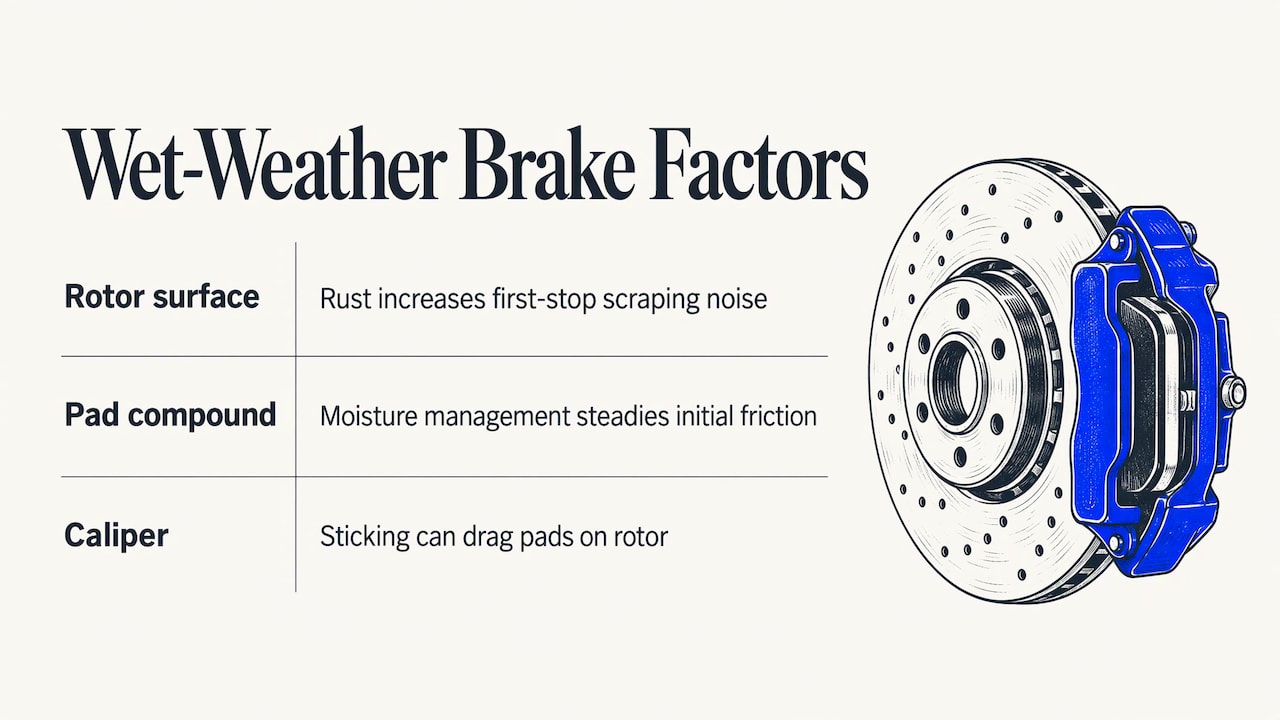
The rotor surface. Bare cast iron starts to rust within hours of getting wet. The more it rusts, the more there is to scrape off, and the more noise you hear on the first stops. Road salt makes it worse, and that is why drivers in snowy regions often hear more of it. Severe rust and corrosion can impair braking and may mean replacement rather than repair.
The pad compound. Pads work by friction, and water between the pad and rotor changes it. A compound that manages moisture well keeps friction steadier in the first stops.
The caliper. If a caliper slide or piston is sticky from corrosion or cold, a pad can drag lightly on the rotor. That can show up as scrubbing noise on one wheel, worn pads on one side and heat.
That is the logic behind how we build our parts: each component addresses a different challenge that weather puts on the braking system.
How to keep brakes quieter in wet and salty weather
Some of this is habit, and some is the parts you choose.
- Use the brakes. Light, regular braking keeps rust from building up. Allstate, citing the Vermont DMV, advises using the brakes, washing the underside to remove road salt, and applying brake cleaner as needed.
- Wash off salt. Rinse wheels, calipers and the underbody after salted roads. For a wider view of how salt attacks a car and how to limit it, see this guide to road salt protection for cars.
- Park out of the damp. Mazda rates rust-induced squeaking as a low issue and suggests parking indoors when it is humid or wet to prevent it.
- Replace pads before they wear down to the metal. Do not wait for grinding.
- Choose parts built for wet conditions. A coated rotor and a moisture-managing pad give the rust and the water less to work with.
What we do about wet-weather braking
Our range is built around this problem. HydroAdaptive brake pads are designed for moisture management and stable friction. GEOMET-coated rotors are designed to protect against corrosion from moisture and road salt. ClimateFlex calipers are designed for smooth operation through winter cold and summer heat. Pads and rotors are developed as a matched system, so rotors are sold only as part of brake kits with compatible pads.
The parts are matched by vehicle, so you pick your car and get the right fit. If you want more detail before choosing, read about ceramic brakes in rain, zinc coated brake rotors and how long rotors last.
Choosing the right set for a wet-weather driver
The best choice depends on how you drive.
- Daily commuters brake in stop-and-go traffic on wet roads every day, so the first-stop rust noise repeats often. A rotor coating and a moisture-managing pad are directly relevant.
- Rideshare, delivery and high-mileage drivers wear pads faster and cannot afford downtime. Fitting a complete kit means pads and rotors wear together.
- Drivers in snow and salt regions benefit most from corrosion protection on rotors.
- Larger vehicles such as SUVs and trucks carry more weight and put more load on brakes, so matching parts to your exact model matters.
- DIY owners and mechanics get a straightforward fit: parts matched by vehicle, with pads and rotors designed to work together.
Our Type 07 brake pads and GC Type rotors are available individually or in front and rear kits for models such as the Honda CR-V and Acura RDX.
Get a matched set for wet roads
If your brakes are worn, or you want to stop the rain-day noise at its source, fit parts made to work as a system. Our kits pair HydroAdaptive ceramic pads with GEOMET-coated GC Type rotors for the models we list.

Find your vehicle and a matched kit at AAA Frictions.
Our perspective
Most wet-weather grinding comes down to the same chain of events: water reaches bare metal, rust forms in hours, and the first stops pay for it. We think the answer should be built into the parts, not left to the driver to manage.
That is why we design pads, rotors and calipers around what weather does to a braking system. HydroAdaptive pads are made for moisture management and stable friction. GEOMET-coated rotors are made to protect against corrosion from moisture and road salt. ClimateFlex calipers are made for smooth operation in winter cold and summer heat.
We also develop rotors and pads as a matched system, which is why rotors are sold only with compatible pads. A driver who wants predictable braking in rain, humidity and snow gets the most from parts that were designed to work together.
AAA
FAQ
Why do my brakes sound like they are grinding when it rains?
Moisture can form a thin layer of surface rust on the rotors, and the pads scrape it off over the first few stops. That causes a temporary scraping or grinding sound that should clear once the brakes are dry. If it lasts through several trips, have the brakes checked.
Is it normal for brakes to grind after rain?
A short-lived scrape on the first few stops is common and usually harmless. Constant grinding, a noise that keeps getting louder, or any change in pedal feel, stopping distance, vibration or warning lights is not normal. Those call for an inspection.
Can I spray WD-40 on my brakes to stop the noise?
No. WD-40 says its multi-use product should not be sprayed on braking surfaces or parts where friction is needed, because it may impair braking. Find the cause of the noise instead.
How do I know if the grinding means my pads are worn out?
Worn-out pads typically cause a deep, constant metallic grinding that does not depend on the weather, as the backing plate contacts the rotor. Bridgestone says to get the vehicle to a service shop as soon as possible if you hear it. Check pad thickness through the wheel, and replace pads before they reach the metal.
Can wet-weather brake noise be prevented?
You can reduce it. Brake regularly, rinse salt from the underside, park out of the damp when you can, and replace worn parts on time. Coated rotors and moisture-managing pads, like those in our kits, are designed to address the rust and moisture that cause it.
Sources
- Why Your Brakes Squeak And When You Should Actually Worry, Motor1
- Audi of America technical service bulletin, NHTSA (2023)
- What Causes Squeaky Brakes & How to Fix Them? Allstate
- Why Are My Brakes Squeaking? Mazda USA
- Signs You Need New Brake Pads, Mitsubishi Motors Canada
- Wondering When to Replace Brake Pads? Bridgestone
- WD-40 FAQs
- WD-40 Australia: brake callipers FAQ
- Road salt protection for cars
- Brake warning lights: what each one means