


A brief scrape on the first stop of a freezing morning is usually moisture and a film of rust on the rotors. A grind that stays after the brakes warm up is not. It points to worn pads, trapped grit or a caliper that is not letting go. The difference matters, and so does the hardware: pads that manage moisture, rotors that resist salt and calipers that keep moving in the cold keep winter noise from turning into winter damage. That is what our HydroAdaptive pads, GEOMET-coated rotors and ClimateFlex calipers are built for.
This guide shows how to sort a harmless cold-start noise from a real fault, what to do about each, and how to cut down winter brake trouble before it starts.
TL;DR
- A light grind or scrape on the first few stops after parking outside in cold or damp weather is usually surface rust or moisture and clears quickly.
- Grinding that continues once the brakes are warm, gets worse, or comes from one wheel needs inspection.
- A steady metal-on-metal grind every time you brake usually means the pads are worn through. Stop driving and get it repaired.
- Never spray WD-40 or another lubricant on pads or rotors to quiet them.
- Salt and grit are the real winter enemies: they rust rotors, jam caliper slides and keep pads from releasing.
Table of Contents
- Why brakes grind in cold weather
- Normal winter noise or a real problem?
- When grinding means stop driving
- Brakes dragging in the cold
- What not to spray on noisy brakes
- How to cut down winter brake trouble
- Parts designed for winter conditions
- Our perspective
- FAQ
- Sources
Why brakes grind in cold weather
Winter attacks a brake system from several directions at once, and each produces a slightly different noise.
Moisture and flash rust. Bare cast-iron rotors pick up moisture and rust overnight. That rust layer feels rough until the pads scrub it off in the first stops. Toyota’s winter guide describes the same effect: overnight moisture on rotors creates surface rust that is scrubbed away in the first stops. Mazda rates a thin layer of rust from humidity, rain or snow as a low-severity issue that is likely to go away after a few braking applications.
Frozen water. Toyota Canada notes that water that freezes inside the brakes overnight can cause grinding and squealing the next morning, and that repeated freeze and melt cycles cause extra wear on brake components.
Cold pad material. Composite pad material is harder when it is cold, which makes it more prone to vibration. The result is more noise on the first stops that fades as the pads warm.
Salt, sand and grit. This is the cause that does lasting harm. Salt, sand and grit can pack into caliper slides, pad clips and the gap between pad and rotor. Audi’s technical service bulletin filed with NHTSA lists debris such as stones, grit, road salt or sand between disc and pad among the most common causes of brake noise, alongside pads at their wear limit, badly bedded new pads and rust-covered discs after long parking.
If you want the cold-start version in more detail, our guide to brakes squeaking when cold covers it, and why rotors rust after rain explains the film you see on the disc.

Normal winter noise or a real problem?
The first useful test is timing. A healthy brake system can be noisy on a cold, wet morning simply because conditions changed. Noise that stays after the brakes are warm tells you something else is going on.
Use this table as a first sort. It is a guide to what to do next, not a diagnosis.
| What you hear or feel | When it happens | Likely cause | What to do |
|---|---|---|---|
| Light grind or scrape | First 3 to 5 stops after parking outside in cold or damp weather | Surface rust or moisture on the rotors | Drive normally and see if it fades |
| Grinding that continues | After several stops or the whole trip | Trapped grit, glazing, a sticking caliper or worn pads | Get the brakes inspected soon |
| Steady metallic grind | Every time you brake | Pads worn through, steel cutting the rotor | Stop driving, repair now |
| Grinding plus pulsing pedal or wheel | While braking | Scored or uneven rotor | Inspection and likely rotor replacement |
| Constant grind or scrape | Even when not braking | Dragging brake, wheel bearing or other drivetrain issue | Inspection before further driving |
The first row matches what American Pride Automotive describes as usually not a concern: noise that follows parking in cold or damp conditions, is a light squeak or brief scrape, disappears within a few ordinary brake applications and comes with no pulling, pedal vibration or warning light. RAC makes the same point: a thin layer of surface rust is often normal in wintry weather and usually clears after a few brake applications, but persistent rust, pitting or continued noise should be investigated.
The lower rows match Denton Transmissions’ breakdown: a steady metallic grind each time you brake means the pads are gone, grinding with a pulsing pedal or steering wheel usually means a scored or warped rotor, and a constant grind when you are not braking often points to a wheel bearing, a CV joint issue or caught debris.
Pinpoint where it comes from
Locating the noise is half the repair. Audi’s bulletin stresses that identifying the corner or axle (left front, front axle, rear axle) is critical to fixing it properly and says an assistant listening from inside or outside the vehicle may be needed. A noise from one wheel only is a stronger sign of a stuck caliper or a single worn pad than a noise from all four.
When grinding means stop driving
Some grinding is not something to wait out. RAC classes a grinding noise when braking as worn pads or damaged discs that need immediate repair, and a metal-on-metal scraping sound as pads worn down completely, which means stop driving and seek urgent repair.
Stop and arrange a tow if the grinding comes with any of these, as listed by ProStreet:
- the pedal sinks or feels very soft
- braking force is reduced
- the vehicle pulls sharply to one side
- a red brake warning light comes on
- fluid is leaking
- a wheel is smoking or extremely hot
- the steering shakes violently or a wheel feels loose
- the grinding is severe or suddenly gets worse
AAA also advises an inspection by a certified technician if the dashboard brake light is on or you notice pulsing, a steering pull or grinding and other unusual noise when braking. If a light is on, see why your brake light might be on. If the pedal feels soft in the cold, read about spongy brakes in cold weather. If the pedal ever goes to the floor, what to do when brakes fail covers the next steps.
Worn pads are the most common reason for a true grind. Our guide to brake pad wear signs shows what to look for and how thin is too thin. A shop that checks pad thickness will typically want to see a minimum of about 3 to 4 mm of friction material going into winter.
Brakes dragging in the cold
A dragging brake is one that does not fully release. You may notice a faint grind or scrape while coasting, a hot wheel after a short drive, a burning smell, a pull to one side or worse fuel economy.
In winter the usual culprit is corrosion. Salt spray can rust caliper pins and slides so pads cannot retract fully, which causes constant dragging and premature pad wear. Moisture trapped against iron rotors forms pits that wear the pad surface unevenly and can create pedal pulsation. Grit in the pad clips does the same job from a different angle.
Water can also freeze in or around the caliper overnight. Our guide to a brake caliper frozen overnight covers the causes and safe next steps. One more cold-weather trap: leaving the parking brake engaged overnight in freezing conditions can freeze the cables and leave a rear wheel stuck.
A dragging brake is a reason to have the car inspected rather than to keep driving, because heat from constant contact wears pads quickly and can damage the rotor.
What not to spray on noisy brakes
It is tempting to reach for a can of lubricant when something scrapes. Don’t. WD-40’s own FAQ says its multi-use product should not be applied to braking surfaces or components where friction is required, because it may impair braking performance. Contaminated pads or rotors should not be “burned off” by driving either: contaminated friction material may need replacement and the system should be inspected.
A noise has a cause: wear, hardware, glazing, contamination, corrosion or a caliper problem. Treat the cause. If you suspect glazed rotors, see our guide to glazed brake rotors.
How to cut down winter brake trouble
Most of what drivers can do is simple, and it starts before the first snowfall.
- Get a measured inspection before winter. A proper inspection is a measurement, not a glance: pad thickness at every wheel, rotor thickness and condition, caliper slide pins for corrosion or sticking, brake fluid level and condition, and hardware and lines for leaks. AAA recommends inspection by a certified technician on the manufacturer’s schedule. Brake hoses deserve a look too, see our brake hose inspection guide.
- Park indoors when you can. Mazda recommends parking indoors when conditions are humid or wet to prevent the rust film that causes morning noise.
- Watch the brake fluid. One winter checklist suggests checking fluid more often in cold months because it absorbs moisture and contaminated fluid can freeze.
- Rinse off salt. Washing the undercarriage and wheels keeps salt from sitting on hardware. When you clean wheels, there is a sound method for removing brake dust safely that avoids harsh scrubbing.
- Use the brakes gently on the first stop. A few light applications clear surface rust before you need full braking power.
- Choose parts built for the season. If pads are worn or rotors are already pitted, replacing them with components designed for moisture, salt and cold is the lasting fix.
Parts designed for winter conditions
When the grind is worn pads, pitted rotors or sluggish calipers, the repair is an opportunity to fix the weather problem too. Each of our components addresses a different challenge that weather puts on the system.
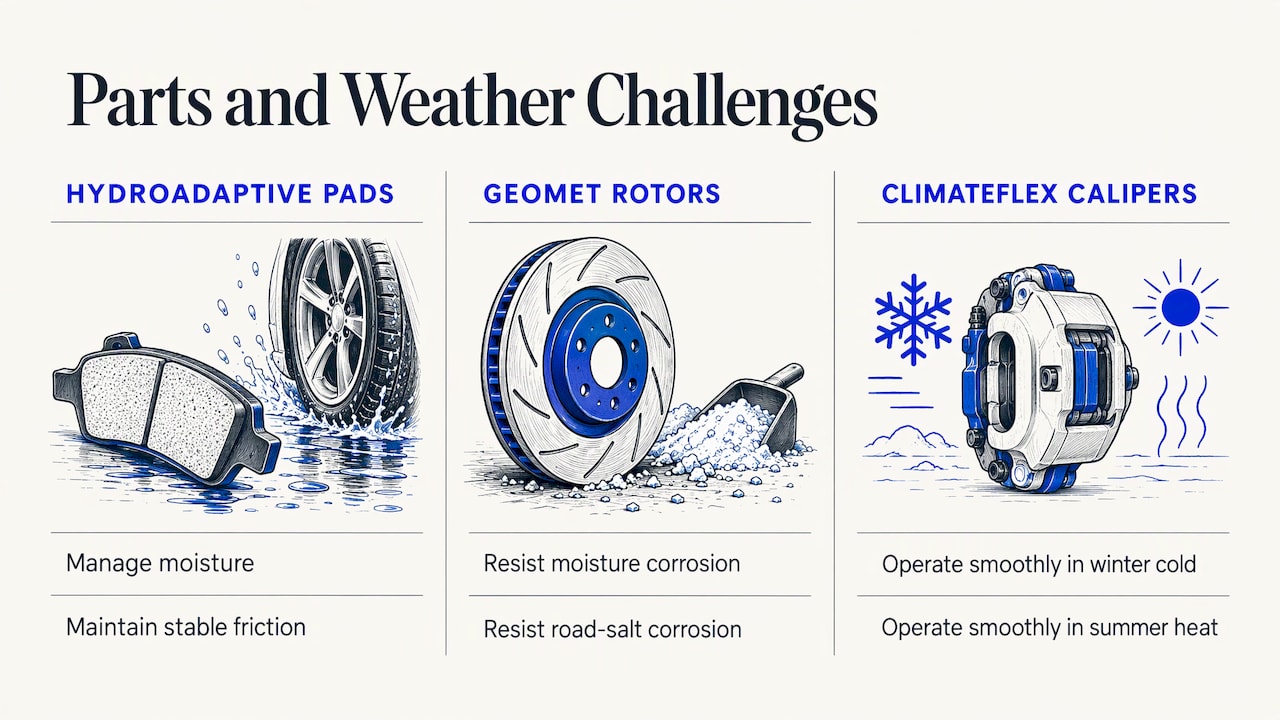
Our HydroAdaptive brake pads are designed for moisture management and stable friction. GEOMET-coated rotors are made to protect against corrosion from moisture and road salt. ClimateFlex calipers are designed for smooth operation through winter cold and summer heat. We develop rotors and pads as a matched system, which is why rotors are sold only as part of brake kits with compatible pads. Parts are matched by vehicle, so you order for your make, model and year.
For a full refresh, start with a front and rear kit such as the Honda CR-V 2020-2022 kit with Type 07 pads and GC Type GEOMET rotors. Kits are also listed for the Acura RDX 2020-2024 and the Volvo XC40 2019-2023. You can also browse Type 07 brake pads or Type 03 brake pads for your vehicle.
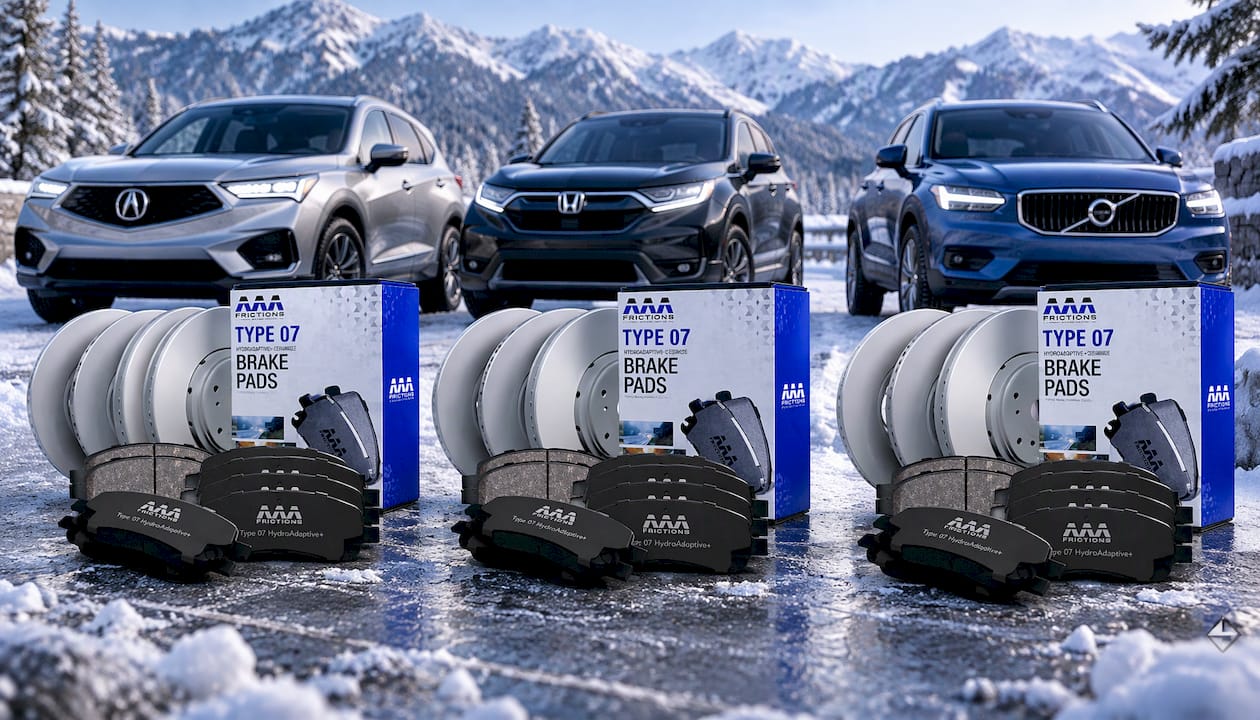
Mechanics replacing parts for customers and DIY owners doing their own pads get the same vehicle-matched fit, and high-mileage drivers such as rideshare and delivery drivers, who put the most winter miles on their brakes, can match a kit to their vehicle on the AAA Frictions site.
Our perspective
Winter does not break brakes in one dramatic moment. It wears them down through small, repeated insults: a film of rust every night, salt packed into a slide pin, a pad that does not quite release. By the time the noise turns into a grind, several of those have usually been building for weeks.
That is why we look at the system as a whole. Moisture, corrosion and cold each hit a different component, so we build for each one: HydroAdaptive pads for moisture management and stable friction, GEOMET-coated rotors against corrosion from moisture and road salt, and ClimateFlex calipers for smooth operation in winter cold and summer heat.
We also develop rotors and pads as a matched system, and that is why rotors ship only in kits with compatible pads. A rotor and a pad designed together behave more predictably than two parts that merely fit.
Our aim is simple: braking that stays consistent when the weather changes, so a cold morning is just a cold morning.
AAA
FAQ
Is it safe to drive with grinding brakes in winter?
It depends on the grind. A light scrape that disappears within a few stops after a cold, damp night is usually surface rust. A grind that persists, gets louder, comes from one wheel or comes with pulling, a soft pedal or a warning light is not safe to keep driving on. A steady metal-on-metal grind means the pads are likely worn through, so stop driving and arrange repair.
Why do my brakes grind only on cold mornings?
Overnight moisture forms a thin layer of rust on the rotors, and cold pad material is harder than warm material. The pads scrub the rust off in the first few stops, which is why the noise fades. If it still grinds once the brakes are warm, have them checked.
Why do my brakes drag in cold weather?
Usually corrosion or grit. Salt can rust caliper pins and slides so the pads do not fully retract, and frozen moisture can hold a caliper or parking brake cable. Signs include a hot wheel, a burning smell, a pull to one side and faster pad wear. Get a dragging brake inspected promptly.
Can I spray WD-40 on my brakes to stop the noise?
No. The manufacturer says its multi-use product should not be applied to braking surfaces or components where friction is required, because it may impair braking performance. Find the cause of the noise instead, whether that is wear, grit, corrosion or a sticking caliper.
Sources
- Brakes Squeaking in Cold Weather? What the Noise Means
- Audi Technical Service Bulletin, NHTSA (2023)
- Cold Stop: How to keep your brakes working this winter, Toyota Canada
- Why Are My Brakes Squeaking? Mazda USA
- Squeaky brakes: causes and solutions, RAC Drive
- Brakes Grinding? What the Sound Means, Denton Transmissions
- Grinding Noise When Braking, ProStreet
- Winter Driving Tips From AAA
- Pre-Winter Vehicle Safety Inspection, Kirksville Motor Company
- Winter brake maintenance checklist, West Island Garage
- WD-40 UK FAQ
- What WD-40 Can and Can’t Do for Your Car, CarCody
- Remove brake dust safely