


Brake pads squeal for a handful of reasons, and most are not emergencies. A high-pitched squeal on light braking is often normal vibration, surface rust or dust. The same sound, once it is constant or paired with grinding, a soft pedal or a longer stopping distance, points to worn pads or a hardware problem that needs a mechanic. This guide helps you tell the two apart, fix what you can, and know when to stop driving on it.
TL;DR
- A squeal only at low speed and light pedal pressure, which fades when you press harder, is usually normal “stick-slip” vibration, not a fault.
- A thin layer of rust after rain, a cold night or a few days parked commonly causes a first-stop squeal that clears within a few stops.
- A steady squeal on every stop, or a squeal that turns into grinding, usually means the wear indicator is touching the rotor. Get the pads checked now.
- Squeal from one wheel, a pulling car or a changed pedal feel calls for an inspection of the caliper, hardware and brake fluid.
- Do not sand or hone a glazed rotor to quiet it. Adjusting how you brake is the recommended first step.
Table of Contents
- Quick diagnosis: match the sound to the likely cause
- The built-in wear indicator: the squeal that is meant to annoy you
- Why good pads still squeal: stick-slip and light braking
- Glazed pads and rotors
- Moisture, rust and cold weather
- Hardware, calipers and fluid: when the pads are fine but one wheel is not
- New brakes that squeak
- What to do about it: a practical order of operations
- When squealing is a safety issue
- Our perspective on squeal and weather
- Replacing squealing brakes with a matched set
- Keeping brakes quiet longer
- FAQ
- Sources
Quick diagnosis: match the sound to the likely cause
Start with when the noise happens. The timing narrows the cause faster than the pitch does.
| When it squeals | Most likely cause | What to do |
|---|---|---|
| First stop of the morning or after rain, gone in a few stops | Surface rust or moisture film on the rotors | Drive normally and watch whether it clears |
| Light braking at low speed, quiet when you press harder | Normal stick-slip vibration, possibly glazing | Brake a little firmer and see if it fades |
| Every stop, constant high-pitched squeal | Wear indicator touching the rotor | Measure pad thickness or book an inspection |
| Squeal turning into grinding or scraping | Pad material gone, metal on metal | Stop driving it and replace pads and check rotors |
| New pads, first days | Bedding in | Give it time, check it if it persists |
| Squeal from one wheel only | Sticking caliper, lubrication or fluid condition | Have that corner inspected |
| Rattle or click when reversing | Pad moving in caliper guides, worn or missing springs | Have the hardware checked |
The rest of this article explains each row.
The built-in wear indicator: the squeal that is meant to annoy you
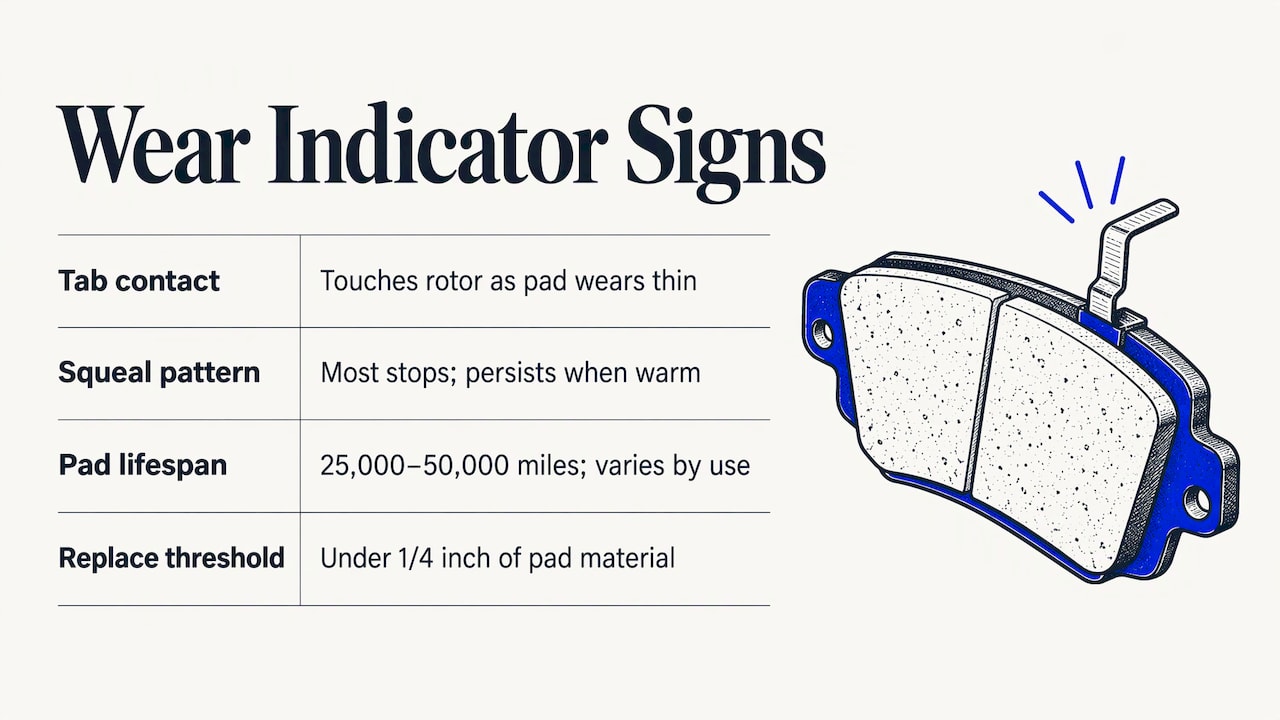
Many pads carry a small metal tab on purpose. As the friction material wears thin, the tab touches the rotor and makes a bright, constant squeal. Mazda describes this as an intentional design feature that alerts you the pads need replacing.
The giveaway is consistency. A wear-indicator squeal tends to show up on most stops, often while you are driving and not only while braking, and it does not go away when the car warms up. The same Mazda page notes that most pads last between 25,000 and 50,000 miles, depending on driving habits and pad type. Stop-and-go commuting, heavy loads and hilly routes sit at the short end of that range.
You do not have to guess. Look through the wheel spokes at the pad, or have the wheel off. Toyota says that pad material under 1/4 inch thick is the point to consider new pads. If you are near that, book the job rather than waiting for the sound to get worse.
When squeal becomes grinding
If the squeal changes to a harsh grinding or scraping, the friction material is likely gone and the metal backing plate is rubbing the rotor. Toyota’s guidance is that this damages both parts and that prompt replacement can help prevent further harm. At that point, a pad swap alone may not be enough, because a scored rotor will keep affecting pad life and noise. Replacing pads and rotors together is the cleaner fix. Our guide to uneven brake pad wear explains why one pad can wear out far ahead of the others.
Why good pads still squeal: stick-slip and light braking
This is the question behind most of the searches for squeaky brakes with pads that are fine, and the answer is mostly physics, not a defect.
An NHTSA technical bulletin explains that brake squeal comes from tiny vibrations as the rotor moves against the pad, a condition called stick-slip. It is most common during light braking, when low pedal pressure spreads force unevenly across the pad. The same document describes normal squeal as occurring in a narrow set of conditions, such as low speed and light pedal application. Abnormal noises show up across a wider range, at any speed or temperature, under light or heavy braking.
The bulletin lists two clear signs that a squeal is the normal kind:
- Applying more brake pressure makes it go away.
- The rotor has a polished, mirror-like finish.
If both are true, you are very likely hearing normal squeal, not a failing part.
Why every part can contribute
The bulletin also points out that every component, even the bolts, has bending and twisting modes that shift with brake pressure and temperature. The movement is far too small to see, which is why correct fastener torque matters so much after a brake job. Temperature, mass, geometry, insulation, lubrication, weather and driving conditions all play a part. In plain terms: noise is a system result. A pad, rotor and caliper that are well matched and correctly installed give the system less to complain about.
Glazed pads and rotors
Glazing is a hardened, shiny surface on the pad or rotor, typically from heat. Aggressive braking, long light-pressure drags and repeated heavy stops can all cause it.
An NHTSA bulletin on slow-speed squeal calls glazed pads and rotors the fingerprint of normal, light-footed, slow-speed squeal, and states that a glazed rotor is not a safety or performance issue. It also advises against sanding or honing the rotor, because imperfect work can introduce judder. Its recommended countermeasure is a change in habit: a little more pedal force is enough to improve the noise.
Mazda’s advice is similar and adds practical habits for avoiding chronic glazing: apply the brakes intermittently or downshift on long descents, use only your right foot for both pedals, and look farther ahead so you brake earlier and more gently. If you suspect glazing, Mazda suggests having the brakes inspected.
Moisture, rust and cold weather
If your brakes only squeal in the morning, after rain or after a car wash, weather is the first suspect.
Iron rotors start to rust almost as soon as they get wet. Overnight, a thin film can form on the swept surface. RAC Drive notes that in cold, wintry weather a thin layer of surface rust is often normal and usually clears after a few braking applications. It also says persistent rust, pitting or continued noise should be investigated.
That gives you a simple rule for damp-weather squeal:
- Clears in one to a few stops: normal. The pads wiped the film off.
- Returns every morning but is gone by the end of the block: still normal in wet or humid climates, especially if the car sits.
- Stays all day, or the rotor face looks pitted or deeply rusted: get it looked at.
Why winter makes it more likely
Cold changes how the system behaves. Condensation, stiffer rubber parts, tighter clearances and road salt can all affect vibration and friction before the brakes warm up. If your car lives outdoors through a northern winter, a short squeal on the first stop is common. It is also common on the first low-speed stop after a wash, when water sits at the pad and rotor interface until heat dries it.
We cover the rust side in more detail in why brake rotors rust after rain and when to worry.
What parked and short-trip cars should expect
Cars that sit for days, or only make short trips, give surface rust more time to form and less heat to burn it off. If that is your routine, an occasional morning squeal is not a sign your pads are worn. Taking a longer drive with a few moderate stops now and then helps keep the rotor faces clean.
Hardware, calipers and fluid: when the pads are fine but one wheel is not
Noise that follows one corner of the car deserves a closer look.
- Sticking caliper or slides. A caliper that does not release or move freely keeps a pad dragging, which makes heat, uneven wear and noise. Allstate lists poor lubrication and improper installation among the known causes of squeaky brakes.
- Brake fluid. The NHTSA bulletin on slow-speed squeal says that when squeal comes from one wheel in particular, fluid condition is likely part of the problem. Moisture in the fluid is heavier than the fluid and collects in the calipers, affecting viscosity and lubrication. The bulletin notes that fluid replacement is required every two years by the maintenance schedule, so check your owner’s manual for your vehicle’s interval.
- Missing or worn springs and clips. These hold the pad steady in the caliper. Loose hardware lets the pad move and vibrate.
If a caliper is seized or leaking, replacing it is the right fix. Our guide to rear brake caliper replacement walks through the steps, costs and pitfalls.
Squeaking or clicking in reverse
Backward noise is a frequent complaint. An NHTSA service bulletin attributes rattling and clicking when reversing to relative movement of the pad in the caliper guides, usually from defective or missing spring elements. So if the sound only appears when you back out of the driveway and then disappears going forward, have the clips and springs inspected during your next brake service. Dust and debris on the pad and rotor surfaces can add squeal at low speed, too.
New brakes that squeak
Fresh pads and rotors need to bed in: the surfaces mate and deposit an even layer of friction material. A little noise in the first days can be part of that. If it continues beyond the break-in period, look at the usual installation causes: unlubricated contact points, missing hardware, fasteners not torqued to spec, or a rotor that was not matched to the pad.
Another point from the NHTSA material is worth repeating for DIY owners: torque matters because the smallest looped movement can change noise. Follow the torque values in your vehicle’s service manual, clean the pad contact areas and slides, and replace clips rather than reusing bent ones. Brake lubricant belongs on the pad back and the slide points, never on the friction surface or rotor face.
What to do about it: a practical order of operations
- Note when it happens. Cold start, wet, low speed, reversing, every stop. Write it down for a few days.
- Try a firmer, earlier stop. If the squeal fades with more pedal pressure, you are probably hearing normal stick-slip or mild glazing.
- Look at the pads. Measure the friction material. Near 1/4 inch, plan the replacement.
- Look at the rotors. A mirror polish is normal. Deep grooves, heavy pitting or a lip at the edge are not.
- Check one-wheel noise. Inspect the caliper slides, hardware and the age of the brake fluid.
- Replace as a matched set. When pads wear out, new pads on tired rotors often lead to more noise. Pads and rotors designed to work together tend to be quieter and more predictable.
How to stop the noise is rarely a spray or a trick. The reliable fix is correct parts, correct installation and sensible braking habits.
When squealing is a safety issue
Stop and get the car inspected promptly if any of these apply:
- Grinding or scraping when you press the pedal.
- A soft, low or sinking pedal.
- The car pulls to one side under braking.
- Longer stopping distances than you are used to.
- A brake warning light.
- A squeal that is persistent, whatever the weather.
Allstate’s guidance is that some brake noises are harmless and clear as brakes warm up or moisture dries, while persistent squealing, grinding or reduced braking performance should be checked by a mechanic soon. If your pedal feels wrong or stopping power drops, do not wait for the next service. Our article on what to do when brakes fail covers how to react and how to prevent it.
Our perspective on squeal and weather
We build brake parts around one idea: weather is the biggest variable your brakes face, and a lot of the noise drivers hear is weather in disguise.
Moisture film on the rotor, salt and grit, cold-stiffened parts and heat cycles all change how pad and rotor meet. That is why our range addresses each challenge separately. Our HydroAdaptive pads are designed for moisture management and stable friction. Our GEOMET-coated rotors are designed to protect against corrosion from moisture and road salt. Our ClimateFlex calipers are designed to operate smoothly through winter cold and summer heat.
We also develop rotors and pads as a matched system, which is why rotors are sold only as part of brake kits. Noise is a result of the whole system working together, and we think the pad and rotor should be designed for each other and matched to your vehicle, not mixed from unrelated parts.
For daily commuters, rideshare and delivery drivers, and anyone who covers high mileage through changing seasons, the goal is simple: predictable braking response, stop after stop, in rain, humidity, snow and cold.
AAA
Replacing squealing brakes with a matched set
If your inspection says it is time for new pads, it is a good moment to look at the whole corner. Our Type 07 pads and Type 03 pads are HydroAdaptive ceramic pads designed for stable friction in wet and variable conditions, and our GC Type rotors carry a GEOMET coating designed to resist corrosion from moisture and road salt.

Parts are matched by vehicle, and rotors come in kits with compatible pads so the set works as designed. Browse the complete front and rear brake kits and enter your vehicle to see what fits. If you want pads and rotors together, the Type 07 pads with Type SC rotors kit is one place to start. For sticking or seized calipers, see our ClimateFlex calipers.
Keeping brakes quiet longer
A few habits reduce recurring noise without hurting braking:
- Brake earlier and smoother. Looking ahead and avoiding long, light drags helps prevent glazing.
- On long descents, use a lower gear so the brakes do not carry the whole load, as Mazda suggests.
- Drive the car. Cars that sit collect surface rust. A longer drive with a few firm stops clears it.
- Replace brake fluid on schedule. Moisture in the fluid affects the calipers.
- Torque and lubricate correctly at every pad change, on the right surfaces only.
- Replace pads before the wear indicator sounds. Checking thickness at tire rotations makes this easy.
- Keep a record. Mileage at each pad change tells you how your driving compares with the usual 25,000 to 50,000 miles range.
You can find more maintenance guides in our library.
FAQ
Can squeaky brakes go away on their own?
Sometimes. Noise from surface rust, moisture or a new set of pads bedding in often fades after a few stops or a few days. Noise from worn pads, a sticking caliper or loose hardware will not fix itself and tends to get worse. If it is persistent, or comes with grinding or reduced braking performance, have a mechanic look at it.
Why do my brakes squeak even though the pads are good?
The most common reasons are normal stick-slip vibration at low speed and light pedal pressure, dust or debris on the pad and rotor, glazing, and moisture or light rust. NHTSA says that squeal that stops when you press harder, on a mirror-polished rotor, is a sign of the normal kind. If only one wheel is noisy, check the caliper, hardware and brake fluid.
Why do my brakes squeal in the winter?
Cold and damp conditions make squeal more likely. Moisture forms a film or thin rust layer on the rotors overnight, and parts are stiffer until they warm up. RAC Drive says the thin rust layer usually clears after a few brake applications. If the noise lasts all day, or the rotors look pitted, get them inspected.
Is it safe to drive with squealing brake pads?
A short squeal that clears quickly is generally not a concern. A constant squeal usually means the wear indicator is touching the rotor, so schedule replacement soon. Grinding, a soft pedal, pulling or longer stopping distances mean you should have the car inspected before driving it further.
Should I sand or resurface the rotor to stop the noise?
NHTSA advises against sanding or honing a glazed rotor, since imperfect work can cause judder. It says a glazed rotor is not a safety or performance issue and recommends applying a little more pedal force. If rotors are scored, deeply pitted or worn, replacement alongside new pads is the cleaner route.
Sources
- Squeaky brakes: causes and solutions, RAC Drive
- Advanced Technical Information, NHTSA (MC-10209901-0001)
- Advanced Technical Information, NHTSA (MC-10182262-0001)
- ATU 8/2016, NHTSA (SB-10106088-2280)
- Why Are My Brakes Squeaking?, Mazda USA
- Signs You May Need New Brake Pads, Toyota
- What Causes Squeaky Brakes & How to Fix Them?, Allstate